News
We Will Release Budgeted Funds to Tackle Disasters – Niger Commissioner

By Daniel Ebi , Minna
The Niger State Government says it has concluded plans to strengthen measures aimed at mitigating disasters in the state in the coming months.
It would be recalled that the Nigeria Federal Government recently warned that 33 states may be affected by flooding this year.
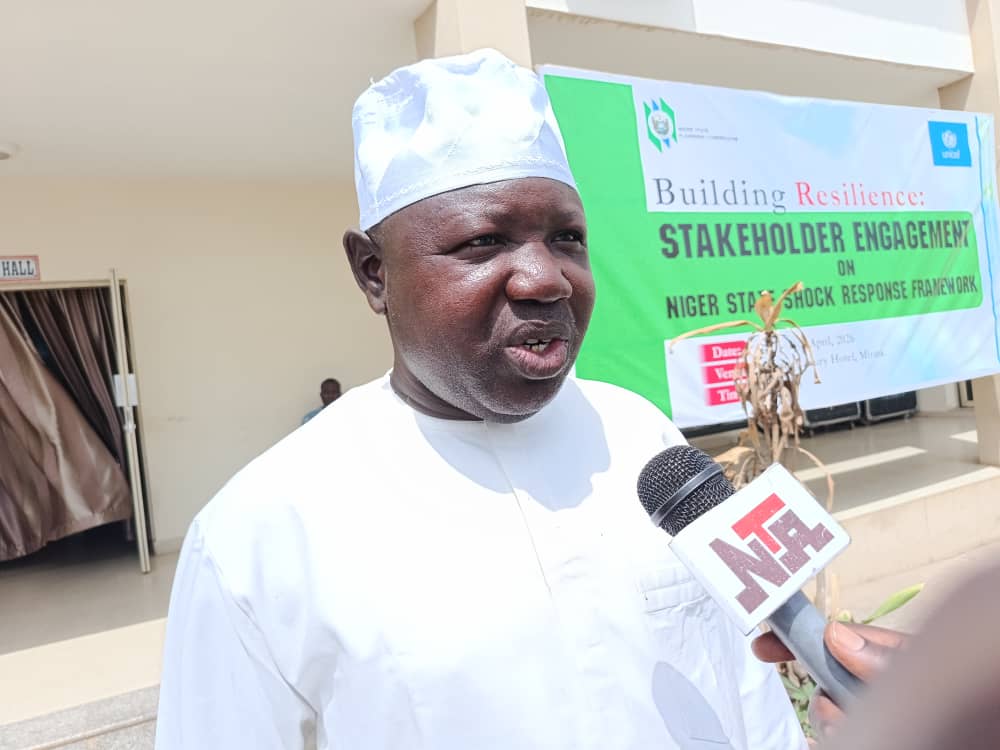
Commissioner for Planning Commission, Mustapha Ndajiwo, disclosed this during a three-day stakeholders’ consultative meeting on the Niger State Shock Response Framework, organised by the state government in partnership with UNICEF.

He said provisions had already been made in the 2026 budget to address disaster response.
According to him,
“We are preparing and doing our best to ensure that we do all we can within our powers.
When we developed the budget, we made provisions for disasters, counterpart funding, and when the time comes, we will release funds for the work.
“We need to take action because Niger is a vulnerable state when it comes to disasters. What we are doing is to brainstorm and review all that we have done in past years and identify areas where we can improve.”
He added that over the years, the government had worked to draft and implement strategic policies, particularly in agriculture, food security, and maternal and child nutrition.
Ndajiwo, however, lamented that for too long, the state’s institutional response had been fragmented, treating planning, nutrition, and emergency management as separate sectors.
He urged participants to design a comprehensive multi-sectoral Shock Response Framework that would make the state’s development plans more resilient to shocks.
Speaking in an interview, Commissioner for Humanitarian and Disaster Management,
Mohammed Inga Ibrahim, said the ministry would collaborate with stakeholders to ensure residents are well informed about realities on the ground and prepared to adapt to any possible emergencies.
According to him, “We will ensure that we look at mitigation measures and proactive steps to curb any disaster.
“A framework without a funding mechanism is just a wish list. We must integrate clear, ring-fenced financing strategies that allow for rapid deployment of resources before a shock becomes a catastrophe.”
He added that crisis response is the responsibility of all relevant ministries, including Agriculture, Health, and Local Government administrators, to build resilience structures that will support the work of the Niger State Emergency Management Agency (SEMA).
“Our framework must establish clear, data-driven early warning indicators such as localized rainfall data, market food prices, and rapid nutrition screening metrics to trigger early action,” he said.
In her goodwill message, Theresa Pamma, WASH Specialist at UNICEF Kaduna Field Office and Emergency Focal Point for Niger State, said the essence of the meeting was to explore how funds could be mobilised to address shocks after disasters.
She added that to reduce the burden of emergencies on affected populations, UNICEF would continue to support the state with technical capacity and additional resources when available.

Earlier, in her welcome remarks, Permanent Secretary, Planning Commission, Aishatu Usman, said the state consistently faces the sobering reality that development remains fragile in the face of unforeseen shocks.
According to her, “Whether it is climate-induced floods destroying farmlands, rising inflation eroding household purchasing power, or localized security challenges disrupting supply chains and displacing families, shocks can wipe out years of development gains overnight.
“When these crises occur, the first casualties are almost always the nutritional status of our children and the economic stability of vulnerable households.”