Business
NIHTE Deputy Chair, Mudasiru pushes Nigeria Transport Pact in Russia

By Matthew Denis, Abuja
Nigeria’s expanding influence in global engineering and transport development was underscored as Mudasiru, the Deputy National Chairman of the Nigerian Institution of Highway and Transportation Engineers, earned international recognition at the 1st International Transport and Logistics Forum (ITLF) in St. Petersburg, Russia.
The development also highlights the rising continental influence of the Federation of African Engineering Organisations (FAEO) in shaping global engineering and logistics discourse.

Mudasiru was formally commended by the forum’s organizing committee for his “support and active participation” at the high-level event, which brought together thousands of policymakers, researchers, and industry leaders from over 80 countries to deliberate on the future of global transport systems.
The forum, organized by Russia’s Ministry of Transport in collaboration with the Roscongress Foundation, served as a strategic platform to address disruptions in global logistics, infrastructure resilience, and emerging transport technologies.
Beyond the recognition, Mudasiru’s participation highlighted Nigeria’s expanding role in global engineering diplomacy.
He attended the forum as part of a five-member delegation of the Federation of African Engineering Organisations (FAEO) — underscoring Africa’s increasing relevance in shaping international transport and logistics policies.
The delegation was constituted under the leadership of FAEO President, Refilwe Buthelezi, and co-led by Kazawadi Papias Dedeki and Martin Kalibbala.
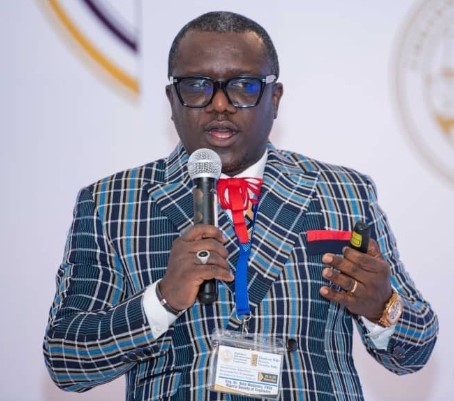
Speaking on the significance of the engagement, Dr. Mudasiru described the forum as a critical moment for Africa’s integration into global logistics systems.
“Africa is no longer on the sidelines; we are actively participating in shaping the logistics systems of the future,” he said, noting that the continent must accelerate the development of alternative transport corridors to reduce vulnerability to global supply chain disruptions.
The discussions at the forum were framed by growing geopolitical tensions affecting global trade routes — particularly in the Middle East.
In a virtual address, Russian President Vladimir Putin reiterated his country’s readiness to collaborate with international partners to stabilize and expand logistics networks.
For African countries, including Nigeria, the implications are significant. Heavy dependence on maritime shipping routes has exposed vulnerabilities in the supply of critical goods, reinforcing the need for diversified and resilient transport systems.
Key sessions at the forum focused on developing international transport corridors, digital transformation in logistics, and financing infrastructure through Public-Private Partnerships (PPPs).
These themes align closely with Nigeria’s ongoing infrastructure development efforts and economic growth priorities.
A major highlight of the engagement was a high-level meeting between the FAEO delegation and Russia’s state highway authority, AVTODOR, where both parties discussed the implementation of an existing Memorandum of Understanding on infrastructure collaboration.
The discussions explored knowledge transfer in toll road development, large-scale corridor management, and construction technologies — areas considered critical to Africa’s infrastructure expansion.
For NIHTE, Mudasiru’s recognition reflects the institution’s growing global footprint and its commitment to promoting professional excellence and international collaboration among Nigerian transport engineers.
Industry observers say such engagements are vital for Nigeria as it seeks to modernize its transport systems, enhance regional connectivity, and strengthen its position in global trade networks.
Mudasiru noted that participation in global forums such as ITLF provides Nigerian engineers with access to cutting-edge innovations and policy insights, which are essential for addressing the country’s infrastructure challenges.

The recognition, he added, is not only a personal achievement but also a reflection of the collective progress of Nigerian engineers and institutions in contributing to global development.
As Nigeria continues to pursue ambitious infrastructure goals, stakeholders say sustained engagement at international platforms would be critical to driving innovations, attracting investments, and shaping policies that supports long-term economic growth.