Politics
Beyond BVAS: Why NIN-Based Voter Register Could Transform Nigeria’s Electoral Integrity


By Bello Shehu Shuni, Sokoto
Nigeria’s electoral process has long been challenged by issues that erode public confidence, including multiple voter registrations, ghost voters, underage voting, and disputes over the credibility of the voters’ register.
As the country prepares for the 2027 general elections, the integration of the National Identification Number (NIN) into voter registration presents a significant opportunity to strengthen electoral integrity through technology-driven verification.
Unlike many established democracies, Nigeria possesses a unique advantage: a centralized biometric identity system managed by the National Identity Management Commission (NIMC).
With over 120 million Nigerians enrolled and each individual assigned a unique lifetime identity linked to biometric information such as fingerprints, facial recognition, date of birth, and citizenship status.
The country has developed an infrastructure capable of supporting a more secure electoral register.
The United States, often regarded as one of the world’s oldest democracies, operates without a centralized national identity system. Voter registration is largely based on state-issued identification, such as driver’s licenses, alongside self-declared information.
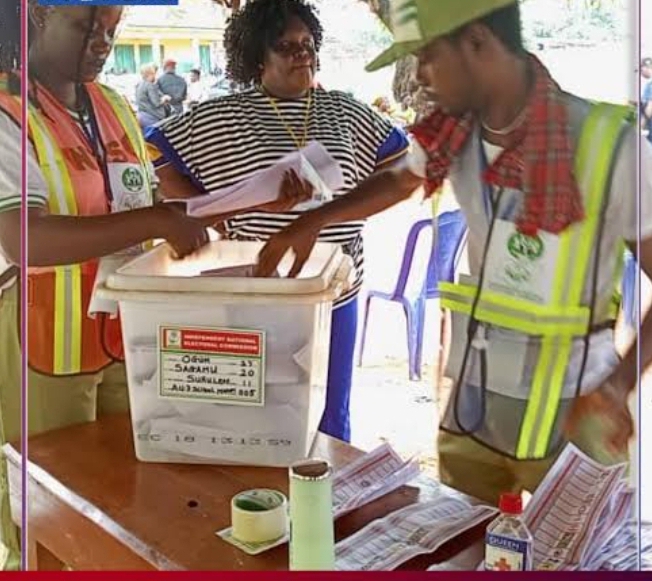
Because electoral databases are decentralized, detecting duplicate registrations across states can be difficult and often depends on limited interstate information sharing.
Nigeria’s centralized identity architecture offers a different path. Making NIN compulsory for voter registration would allow the Independent National Electoral Commission (INEC) to integrate its voter database directly with NIMC’s records.
Such integration would significantly reduce the possibility of multiple registrations, as every NIN is unique and permanently assigned to a single individual. Any attempt to register more than once could be automatically detected and rejected by the system.
The benefits become even more pronounced when combined with Nigeria’s existing Bimodal Voter Accreditation System (BVAS).
While BVAS already authenticates voters through fingerprint and facial recognition during accreditation, anchoring the voters’ register on NIN would establish a more comprehensive verification framework.
The process would involve confirming the uniqueness of the NIN, validating the biometric data stored within the national identity database, and matching those credentials with the biometric verification conducted by BVAS on election day.
This layered authentication process would make electoral fraud substantially more difficult.
A NIN-based register could also address two persistent concerns in Nigeria’s elections: underage voting and ghost voters.
Since obtaining a NIN requires documentation supporting an applicant’s identity, age, and citizenship, the system provides stronger safeguards against the registration of minors and non-citizens.
Furthermore, integrating NIMC’s verified database with INEC’s register would facilitate periodic data cleansing, helping eliminate fictitious or duplicate records and improving the overall accuracy of the voters’ roll.
However, technological capability alone will not guarantee success. Effective implementation requires coordinated legal, institutional, and public policy reforms ahead of the 2027 elections.
First, the National Assembly should provide a clear legal framework by amending the Electoral Act to make NIN a mandatory requirement for Continuous Voter Registration while safeguarding citizens’ constitutional voting rights.
Second, INEC must receive adequate funding and technical support to establish secure, real-time interoperability with the NIMC database.
This integration must prioritize data security, privacy protection, and operational reliability.
Third, government agencies, civil society organizations, and community leaders must intensify public awareness campaigns and expand NIN enrollment nationwide.
Ensuring that every eligible Nigerian obtains a NIN before the electoral cycle begins will be essential to preventing voter exclusion.
Beyond administrative efficiency, the proposal reflects a broader shift toward evidence-based democratic governance. Rather than relying primarily on declarations and manual verification, Nigeria has an opportunity to leverage verified digital identity to enhance transparency, accountability, and public confidence in elections.
As the country continues to modernize its electoral system, the objective should not simply be adopting new technology but ensuring that technology strengthens democratic legitimacy.
A properly implemented NIN-based voter register, supported by BVAS and backed by appropriate legislation, could significantly reduce electoral malpractice while positioning Nigeria among the leading examples of biometric-enabled election management.
Nigeria already possesses the technological foundation. The challenge now lies in translating that capacity into credible electoral reform.
If implemented thoughtfully and inclusively, a NIN-based voter register could become one of the most consequential reforms in Nigeria’s democratic journey, helping deliver elections that are more transparent, more secure, and more trusted by the Nigerian people.