Feature
2027: Power, Succession and Senate ambition in Nasarawa’s Political Order

From Abel Zwanke, Lafia
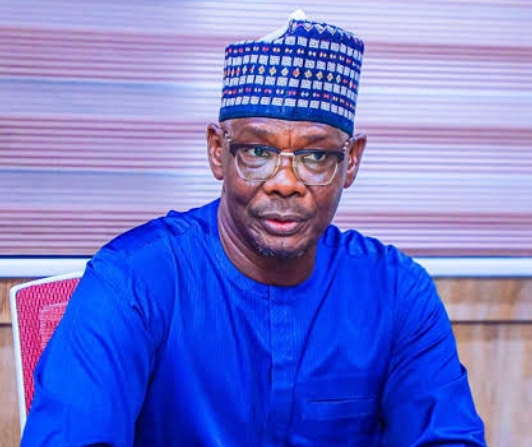
When Governor Abdullahi Sule publicly signalled support for Senator Ahmed Aliyu Wadada as his preferred successor, it was meant to steady the succession conversation within the All Progressives Congress (APC). Instead, it has triggered a wider political recalibration, one that now places senatorial contests at the very heart of Nasarawa’s 2027 electoral arithmetic.
Across Lafia, Keffi, Akwanga, Doma and beyond, the question has shifted from mere endorsement to a deeper interrogation of political control, who ultimately determines outcomes, the governor, the party hierarchy, or an entrenched network of stakeholders whose influence often outweighs formal authority?
According to Findings, the Limits of Executive Preference In theory, a sitting governor wields enormous influence over succession politics. In practice, that power is frequently negotiated. A former commissioner in the state, speaking privately, put it bluntly,
“In Nigeria, no governor has absolute control over succession. There are political fathers, national stakeholders, financiers, and legacy interests. The governor is powerful, but not all powerful.”
This reality appears to define the current situation. While Governor Sule’s endorsement of Wadada has been presented as a strategic move to consolidate APC strength, insiders suggest it may also reflect broader alignments within the party at the national level.

A political strategist in Abuja, Maxwell Adoga explained, “The APC is already thinking beyond Nasarawa. The 2027 election is a national project. Every state must align with the bigger picture, especially in ensuring that President Bola Ahmed Tinubu secures a stronger footing than in 2023.”
The urgency within the APC is not misplaced. In the 2023 presidential election, the party underperformed in Nasarawa, with internal divisions cited as a major factor.
Why Senate Races Matter More Than Ever
While the governorship endorsement dominates headlines, seasoned political actors insist that the senatorial contests may ultimately determine the APC’s success or failure in 2027.
“The Senate races are the engine room of elections,” said Dr. Suleiman Yahaya, a political sociologist in a University Lecturer in Lafia. “They provide the grassroots mobilisation, the funding pipelines, and the local legitimacy that presidential and gubernatorial candidates depend on.”This explains why the emerging contests across Nasarawa South, North and West are attracting intense scrutiny.
For many observers, the answer lies in a delicate balance.The Expanding Theatre of Contest, While the governorship remains symbolically dominant, the emerging battles across the zones suggest that the Senate races may ultimately shape the state’s political direction.
This reality is increasingly evident as major political figures reposition across the three zones.
Nasarawa South: Structure, Performance and Public Sentiment.
In Nasarawa South, the contest reflects a blend of grassroots loyalty, governance credentials, and political memory.
Hon. Abubakar Nalaraba, a serving member of the House of Representatives under the APC, is widely acknowledged for his constituency presence. His facilitation of a technical college in Keana has strengthened his profile as a lawmaker with tangible deliverables.
A community leader in Keana Aboshi Adamu noted, “For many of us, projects matter. The technical college is not just infrastructure; it is opportunity. That is why Nalaraba enjoys strong support among the Alago people.”
Political observers say his strength lies in consistency and accessibility, qualities that often translate into electoral advantage in grassroots-driven contests.
In contrast, Deputy Governor Dr. Emmanuel Akabe APC presents a governance-backed candidacy. A medical doctor, Akabe earned recognition for his role during the COVID-19 response and has been part of the Sule administration’s broader development efforts.
However, perceptions at the constituency level remain mixed.
A civil society actor in Doma remarked:
“There is no doubt he has capacity and has contributed at the state level, but elections are local. Many people in Doma still question the direct impact of his office on their daily lives.”
Critics argue that despite holding high office, visible constituency-level projects and economic opportunities tied directly to his influence remain limited, an issue that may shape voter sentiment.
On the opposition side, Mike Omeri of the PDP brings national experience and a track record in public service. As a former Director General of the National Orientation Agency (NOA), he is credited with facilitating employment opportunities for indigenes across federal agencies.
A political analyst in Lafia observed:
“Omeri’s strength is his network and administrative experience. He nearly clinched the Senate ticket before, losing narrowly. That tells you he already has a structure in place.”
His appeal within Alago-speaking communities, particularly in Keana and Obi, positions him as a serious contender in what is expected to be a tightly contested race.
Nasarawa North: Incumbency, Defections and Political Resilience.
In Nasarawa North, the anticipated entry of Governor Abdullahi Sule into the senatorial race has dramatically altered the equation.
With incumbency influence, extensive political networks, and control of state structures, Sule is widely seen as a formidable aspirant.
A senior APC member in Akwanga said:
“If the governor runs, he becomes the man to beat. Incumbency brings visibility, structure, and influence that are difficult to match.”
However, the field is far from settled.
Labaran Maku, a former PDP stalwart and Board of Trustees member who has now aligned with the SDP, remains a significant grassroots figure. His long-standing connection with local communities continues to resonate.

“Defection does not erase structure,” noted a political observer. “Maku still commands loyalty in many areas.”
Silas Ali Agara of the APC is also considered a strong contender, particularly given his experience as a former deputy governor and his established political base in the zone.
Meanwhile, Halilu Envulanza, who previously contested against the late Senator Godiya Akwashiki, is attempting to reassert his relevance. Analysts suggest his chances will depend largely on coalition-building and party support.
A political strategist in Abuja summed up the contest, “Nasarawa North is shaping into a test of structure versus sentiment, incumbency power against grassroots loyalty.”
Nasarawa West: Consolidation, Loyalty and Strategic Calculations
In Nasarawa West, the contest is defined by strategic positioning, party loyalty, and growing calls for inclusivity.
Dr. Abdulkareem Kana, the current Deputy National Secretary of the APC, has intensified consultations across the zone. His national exposure and deep party connections are seen as key assets.
A party insider said:“Kana understands the system from the inside. His strength lies in party structure and national alignment.”
However, questions remain about how that translates into grassroots mobilisation.
Labaran Shaibu Magaji, the Secretary to the State Government, is widely regarded as one of the most influential figures in the current administration. Credited with administrative reforms and seen as a stabilising force within government, Magaji’s political capital has grown steadily.
Although he has yet to formally declare, pressure from supporters continues to mount.
A youth leader in Keffi stated, “Magaji has capacity, experience, and a strong support base. Many believe he represents continuity with competence.”
Observers point to his performance in the 2023 senatorial primaries and his perceived popularity as indicators of strong electoral potential.
Meanwhile, Faisal Shuaibu remains a speculative figure in the equation, with discussions around possible compensation politics if he misses out on the governorship ticket.
Beyond Endorsements, the Voter Factor
across all three zones, a common theme is emerging, the growing influence of voters, particularly young people.
“Young voters are more aware now,” said Solomon John, an entrepreneur in Karu.
“They are asking questions about performance, not just promises. 2027 will be different.”
This shift suggests that traditional tools of political control, endorsement, zoning, and elite consensus, may no longer guarantee victory.
The Risk of Political Miscalculation
Stakeholders warn that internal party decisions, particularly the allocation of senatorial tickets, could determine broader electoral outcomes.
“Using Senate tickets as consolation prizes is risky,” Yahaya cautioned.
“It weakens the party and alienates voters who want credible representation.”
There are also concerns about zoning dynamics clashing with merit.
A political elder in Doma observed, Benjamin Oduh said “Zoning promotes fairness, but competence must come first. Otherwise, parties risk losing winnable elections.”
As Nasarawa moves toward 2027, the interplay of succession politics, senatorial ambition, and grassroots expectations is redefining the state’s political landscape.
Governor Sule’s endorsement may have set the tone, but the outcome will likely depend on how effectively political actors navigate competing interests, manage internal dissent, and respond to an increasingly assertive electorate.
As one elder statesman in Lafia who do not want his name in print put it, “Power can be negotiated, but the people’s decision cannot be imposed.”
In Nasarawa, that decision is already taking shape, and the road to 2027 promises to be as complex as it is consequential.