
Feature
2027: The Battle for Ebonyi Central and the defining Choice between Ken Eze, Ben Odoh

By Godwin Aliuna
Long before the first ballot is cast in 2027, the political temperature in Ebonyi Central Senatorial District is already rising. What initially appeared to be another routine senatorial contest has gradually evolved into one of the state’s most compelling political battles—one that encapsulates the enduring debate over continuity versus change, experience versus innovation, and grassroots politics versus technocratic leadership.
At the centre of this unfolding drama are two accomplished figures whose contrasting political journeys have set the stage for an electoral contest that promises to test not only their individual strengths but also the evolving expectations of the electorate.
On one side stands Senator Kenneth Eze of the All Progressives Congres, APC, and the incumbent lawmaker seeking another mandate on the strength of his legislative record and constituency engagement.
On the other, is Professor Ben Odoh, of the Nigeria Democratic Congress, NDC, and the former secretary to the Ebonyi State government, SSG, an accomplished academic and administrator whose supporters believe his intellectual depth and policy orientation offer Ebonyi Central a fresh direction in national representation.
Beyond the personalities, however, this contest is fundamentally about competing ideas of leadership. It raises important questions about what constituents now value most in those who seek to represent them in Nigeria’s highest lawmaking institution.
For Senator Eze, incumbency presents both an opportunity and a burden. While holding office offers the advantage of visibility and an established political structure, it also subjects every promise, project and legislative intervention to public scrutiny.
In an era of heightened political awareness, incumbency is no longer sustained by political machinery alone; it must be justified by performance.
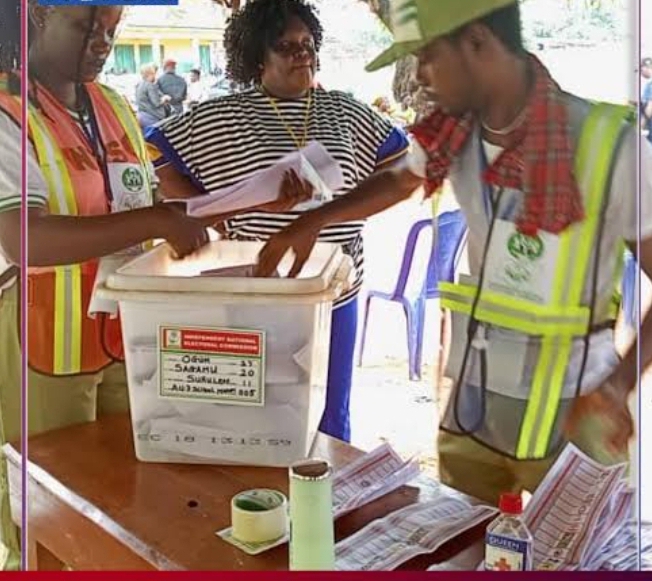
His supporters maintain that his years in the Senate have produced measurable dividends through constituency projects, educational support, healthcare interventions, youth empowerment programmes and employment initiatives.
To them, these achievements constitute a compelling argument for continuity, reinforcing the belief that effective representation should ultimately be judged by visible impact on people’s lives.
Indeed, constituency development has become an increasingly influential currency in Nigeria’s democratic landscape. Across the federation, legislators are often evaluated not merely by speeches delivered on the Senate floor but by tangible improvements they facilitate within their constituencies. Roads, schools, healthcare facilities, agricultural support and economic empowerment programmes frequently shape public perception more profoundly than legislative debates in Abuja.
Yet development projects, important as they are, tell only part of the story.
Leadership also demands political inclusion, coalition-building and the ability to inspire confidence across diverse interests.
While admirers describe Senator Eze as resolute, disciplined and unwavering in his convictions, critics contend that effective democratic leadership requires an equal measure of consultation, consensus and bridge-building.
Whether voters regard his style as a mark of strength or a limitation could become one of the election’s defining issues.
Professor Ben Odoh approaches the contest from an entirely different platform.
Rather than campaigning on legislative incumbency, he is expected to present himself as a candidate whose academic accomplishments, administrative experience and public policy expertise can translate into more robust legislative engagement.
His supporters argue that the complexities of today’s governance environment require representatives capable of contributing not only to constituency development but also to national conversations on economic reform, education, institutional strengthening, innovation and sustainable development.
For them, the Senate should not merely be a platform for attracting projects; it should also be an arena where ideas shape laws, influence national priorities and strengthen democratic institutions.
Odoh’s candidacy also reflects another enduring feature of Nigerian politics—the interplay between community identity and electoral calculation.
Reports of significant support from sections of the Ezza community could strengthen his political prospects, although electoral history repeatedly demonstrates that identity alone rarely guarantees victory.
Elections are ultimately determined by organisation, voter mobilisation, credibility and the ability to build coalitions that transcend communal affiliations.
Like every serious contender, however, Professor Odoh enters the race carrying political baggage that opponents are unlikely to ignore.
His departure from former political associates is expected to remain a recurring campaign issue. Supporters portray the decision as evidence of political independence and principled conviction, while critics interpret it as a demonstration of political inconsistency.
Such contrasting narratives are hardly unique to Ebonyi; they are familiar features of democratic politics across the world, where political realignments often divide public opinion.
Perhaps the most intriguing aspect of the Ebonyi Central contest is that it mirrors the changing expectations of Nigerian voters.
The electorate is becoming increasingly discerning. Citizens now demand representatives who combine accessibility with competence, constituency service with legislative productivity, and political loyalty with independent judgment.
Beyond empowerment programmes, voters increasingly expect lawmakers who can influence policy, strengthen oversight, defend public interest and contribute meaningfully to debates on economic recovery, insecurity, healthcare, education and constitutional reform.
Consequently, the 2027 campaign may be decided less by slogans than by substance.
The candidate who succeeds will likely be the one who presents a compelling vision backed by evidence, demonstrates emotional intelligence alongside political capacity, and convinces voters that he possesses both the character and competence required for national leadership.
Grassroots mobilisation will remain equally decisive. Nigerian elections have consistently shown that sophisticated media campaigns cannot substitute for sustained engagement with traditional rulers, religious leaders, youth organisations, women’s groups, professional bodies and local communities.
Political visibility may shape perceptions, but it is grassroots trust that ultimately delivers electoral victory.
Although political parties will provide the organisational framework for the contest, recent electoral trends suggest that individual credibility increasingly outweighs partisan affiliation, particularly in legislative elections.
Voters are paying closer attention to personal records, accessibility and proven capacity than ever before.
This is why the Ebonyi Central senatorial race deserves attention beyond the boundaries of the district. It is not simply another contest for a seat in the National Assembly; it is a reflection of Nigeria’s democratic evolution.
It offers an opportunity to assess whether performance, ideas and leadership quality are gradually replacing patronage and political sentiment as the primary determinants of electoral choice.
As campaigns intensify in the months ahead, both Senator Kenneth Eze and Professor Ben Odoh will seek to persuade voters that they embody the future Ebonyi Central deserves.
Their arguments will differ, their political styles will contrast, and their support bases will compete vigorously. Yet, in the end, neither campaign rhetoric nor political endorsements will determine the outcome. That responsibility rests solely with the electorate.
When the people of Ebonyi Central eventually file out to vote in 2027, they will be making a decision that extends beyond choosing between two prominent personalities.
They will be defining the kind of leadership they value, the standards they expect from public office and the direction they wish their senatorial district to take in the years ahead.
That, ultimately, is why this contest matters—not only for Ebonyi Central, but also for the continuing story of Nigeria’s democratic journey.