Feature
Enekwachi Akpa: The Quiet Force Behind Umahi’s Quality Infrastructure Revolution in Nigeria

…..How a quiet strategist, contractor and grassroots leader is helping drive Nigeria’s infrastructure revolution
By Aliuna Godwin, Analyst
In Nigeria’s rapidly evolving infrastructure landscape, where the success of major public projects is often measured by their durability, functionality and impact on the people, the names of political leaders and public officials usually dominate the headlines.
While the name of the Minister of Works, Senator Engr. David Nweze Umahi, has continued to dominate conversations around Nigeria’s ambitious infrastructure drive, there are individuals working quietly behind the scenes whose contributions are helping to translate the minister’s vision into concrete results.
One name increasingly associated with that behind-the-scenes effort is Hon. Chief Ogbuefi (Ọsụji) Enekwachi Akpa.
Akpa, a former Chairman of Ohaozara Local Government Area of Ebonyi State, is a politician, community leader, philanthropist, public servant and reputable contractor whose years of experience have placed him in a strategic position within the infrastructure and political landscape of the state and Nigeria at large.
Unlike politicians who thrive on publicity, Akpa has built a reputation as a silent achiever whose activities are often more visible through the results of his engagements than through public pronouncements.
His supporters describe him as a dogged personality who remains committed to a task until the desired objective is achieved.
His background combines grassroots politics with practical experience in construction. As a contractor who has undertaken road and bridge projects,
Akpa is said to possess a strong understanding of the technical demands involved in delivering durable infrastructure, particularly the need for proper supervision, adherence to specifications and effective quality control.
That experience has become particularly significant in his relationship with Umahi, whose tenure as Minister of Works has been characterized by an aggressive push for improved road infrastructure, stronger project monitoring and greater emphasis on durability and value for money.
Akpa is regarded as a senior ally of Umahi and, according to political and infrastructure analysts, has become one of the trusted hands helping to ensure that the minister’s project-delivery philosophy is not lost between policy formulation and actual execution on the ground.
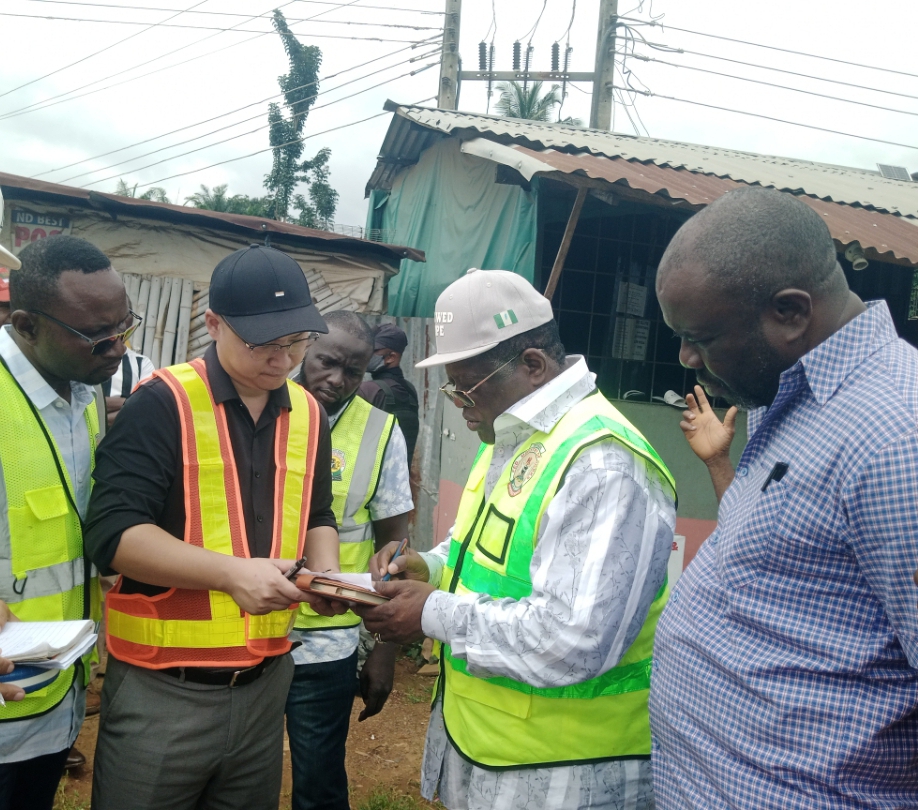
Analysts familiar with his activities say Akpa has been closely involved in monitoring and supervising projects associated with the minister, paying attention to the quality of work, compliance with agreed specifications and the durability of infrastructure being delivered to Nigerians.
For a country where concerns about abandoned projects, poor workmanship and deteriorating infrastructure have persisted for decades, such oversight is crucial.
A road may be inaugurated with fanfare, but its true value is ultimately determined by how long it lasts, how safely it serves motorists and how effectively it connects communities and stimulates economic activities.
It is against this backdrop that Akpa’s construction background becomes an important asset.
His experience enables him to approach infrastructure projects not merely from the standpoint of politics, but from the perspective of someone who understands the practical realities of construction and project execution.
His reported involvement in project monitoring also underscores an important principle in public infrastructure delivery: quality cannot be guaranteed solely by awarding contracts.
It requires continuous supervision, adherence to approved designs and specifications, appropriate materials, competent workmanship and accountability at every stage.
Those who have followed Akpa’s activities believe that these principles explain his growing relevance around Umahi’s infrastructure agenda.
Rather than being merely a political associate, they see him as a stakeholder with the technical exposure and administrative experience required to contribute meaningfully to the delivery process.
But Akpa’s story does not begin and end with federal infrastructure projects. At the grassroots, particularly in Ohaozara Local Government Area, he has cultivated a reputation as a leader interested in the welfare and advancement of ordinary people.
As a former council chairman and former Senior Special Assistant on Local Government Affairs, he has maintained strong links with communities and grassroots stakeholders.
His interventions have particularly focused on young people, women and children, reflecting his belief that development must ultimately translate into better opportunities for the people.
In his home community of Uburu, Akpa is regarded as one of the senior sons who remains accessible to the people.

His humility and close relationship with community members have continued to endear him to supporters who see him as a bridge between grassroots aspirations and higher levels of government.
His philanthropic disposition has equally contributed to his public image. To his admirers, his approach to leadership is not simply about holding political office but about using every available platform to support people and contribute to community development.
Perhaps the most intriguing aspect of Akpa’s public profile is the fact that his influence has largely remained understated.
At a time when political figures often compete for visibility, he has chosen a different path—working quietly, maintaining strategic relationships and allowing results to speak for him.
His role around Umahi therefore offers an interesting perspective on how major public infrastructure projects are delivered.
While the minister provides the political leadership and policy direction, individuals with technical experience and a commitment to quality are needed to ensure that the vision survives the complex process of execution.
For Umahi, whose infrastructure philosophy places considerable emphasis on quality and durability, having trusted stakeholders who understand the importance of project supervision can be an important advantage.
For Akpa, the opportunity provides another platform to deploy his experience in construction, administration and grassroots leadership.
The bigger picture, however, goes beyond one individual or one political relationship. Nigeria needs roads and bridges that will serve generations, not projects that deteriorate shortly after commissioning.
It needs public infrastructure that supports commerce, connects rural communities, reduces transportation difficulties and accelerates economic development.
It is in this broader national context that the contribution attributed to Enekwachi Akpa deserves attention. His journey from grassroots political leadership in Ohaozara to becoming a respected stakeholder and construction practitioner illustrates how experience acquired at the local level can become useful in larger development assignments.
As Nigeria continues to pursue massive infrastructure investments, the country will require more individuals who understand that project delivery is ultimately about the people.
For Akpa, his supporters believe that philosophy has remained central to his public life.
And while the spotlight will naturally remain on those who occupy the highest offices, the infrastructure story will also be shaped by the quiet hands working behind the scenes.
In the assessment of those familiar with his activities, Hon. Chief Ogbuefi Enekwachi Akpa is one of those hands—an understated but strategic figure helping to push the Umahi quality-project philosophy from policy to reality.