
Politics
2027: ‘Ezza Elders’ endorsement of Nwifuru irrevocable, Unshakable- Ex-Reps candidate, Aliuna fires back at critics


By Uchenna Okeh
As political activities gradually gather momentum ahead of the 2027 general election, the contest for political loyalty, traditional endorsement and grassroots support in Ebonyi State is increasingly becoming a subject of intense debate, with former House of Representatives candidate, Aliuna Godwin, insisting that no amount of alleged blackmail or distortion of facts will change the position of the Ezza Ezekuna Elders’ Council on Governor Francis Nwifuru’s second-term ambition.
Aliuna, a veteran journalist and advocate of equity, justice and political zoning, maintained that the reported endorsement of Governor Nwifuru for a second term by the Ezza Ezekuna Elders’ Council remained intact, dismissing suggestions that the influential body was preparing to withdraw its support for the governor and other candidates of the All Progressives Congress (APC).
His position comes amid controversy surrounding a social media publication titled, “2027: Ezza Elders Move to Withdraw Endorsement of Nwifuru, Other APC Candidates.” Aliuna described the publication as misleading, arguing that it had misrepresented the purpose of a meeting scheduled for Saturday, October 31, 2026.
The controversy highlights the growing significance of traditional institutions, community leadership and collective political decisions in Ebonyi State as political stakeholders begin positioning themselves ahead of the next general election.
In a political environment where endorsements can shape public debate, the interpretation of decisions by respected community bodies has become increasingly consequential.
For Aliuna, the proposed meeting of the Ezza Ezekuna Elders’ Council should not be presented as an attempt to reverse an earlier political position.
He argued that linking the meeting to a withdrawal of support for Nwifuru was an unjustified interpretation of the elders’ intentions and could create unnecessary tension within the Ezza community.
He consequently urged those responsible for circulating the report to exercise restraint and avoid portraying Ezza nation in a negative light.
According to him, the spread of unverified political information could undermine public confidence, deepen divisions and distract community leaders from issues requiring their urgent attention.
Beyond the controversy over the alleged withdrawal, the development raises a broader question about the responsibility of political actors, journalists and social media users in reporting sensitive political matters.
Where a traditional council’s position becomes the subject of public speculation, accurate reporting and direct clarification from the institution concerned are essential to preventing misinformation.
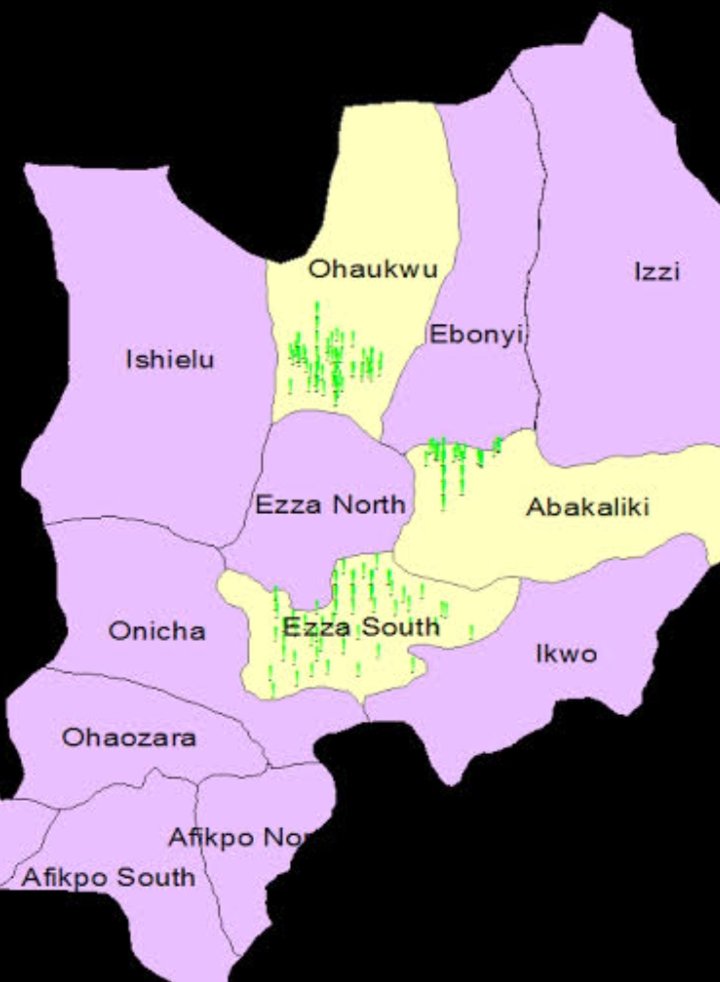
Aliuna also stressed that the forthcoming meeting would address security challenges affecting Ezza North and Ezza South local government areas. He said the gathering, which he identified as a crucial engagement of the elders, was expected to focus on the growing concerns over attacks, killings and destruction of property in the two areas.
The emphasis on security presents a different perspective on the meeting, shifting attention from political speculation to the immediate concerns of residents.
For communities affected by violence, the priority is not merely the preservation of political alliances but also the restoration of peace, protection of lives and property, and the rebuilding of confidence among residents.
The reported security concerns in Ezza North and Ezza South also underscore the need for sustained cooperation among traditional rulers, community leaders, security agencies and government authorities.
While political endorsements can generate debate, the effectiveness of any leadership arrangement will ultimately be judged partly by its ability to address the everyday challenges confronting the people.
According to Aliuna, the meeting will be chaired by Mr. Ugo China, a former two-term member of the House of Representatives and a leader of the Ezza Ezekuna Elders’ Council.

He presented the gathering as an important opportunity for the elders to deliberate on issues affecting the community rather than as a platform for reversing their reported political endorsement.
The distinction is important because traditional institutions often perform multiple roles, including conflict resolution, cultural preservation, community mobilisation and consultation on political matters.
Treating every meeting of such bodies as a signal of electoral realignment risks overlooking their broader responsibilities and the range of issues they may be required to address.
Aliuna further expressed confidence that Ezza nation would continue to support Nwifuru, citing his belief that the governor remained committed to the principle of political zoning and the possibility of power shifting to Ezza people in 2031.
He argued that this expectation was an important consideration in the community’s political calculations.
However, the issue of succession in 2031 remains a political expectation advanced by Aliuna and should be distinguished from any formally established agreement or constitutional guarantee.
The eventual distribution of political opportunities will depend on the prevailing political circumstances, party decisions, consultations among stakeholders and the constitutional processes governing elections.
The debate over zoning nevertheless reflects a longstanding feature of political negotiations in many communities, where questions of inclusion, representation and rotational leadership influence relationships among political blocs.
For supporters of zoning, such arrangements can provide a framework for managing competing interests and promoting a sense of fairness among constituent groups.
At the same time, the sustainability of any zoning understanding depends on the confidence of the parties involved, the clarity of the arrangement and the willingness of political stakeholders to honour their commitments.
Where expectations are not clearly defined, disagreements can emerge over interpretation, timing and the political conditions under which an arrangement is expected to operate.
Aliuna, who has been associated with advocacy for Nwifuru’s 2027 re-election, maintained that critics would not succeed in dividing the Ezza community through what he described as the distortion of facts.
His position reflects the determination of some supporters to maintain political continuity, although the strength and breadth of that support would ultimately be assessed through credible expressions of public and political opinion.
His intervention also brings into focus the relationship between traditional endorsement and democratic choice. While endorsements from respected elders can carry considerable cultural and political significance, they do not replace the constitutional right of eligible voters to make independent decisions at the ballot box.
The credibility of political engagement depends on allowing community members to consider competing arguments without intimidation or the suppression of dissenting views.
In a related development, Aliuna condemned what he described as attacks, killings and destruction of property in Ezza North and Ezza South, alleging that political thugs were responsible for violence carried out in the interests of their sponsors.
The allegations, which require independent investigation, point to the wider challenge of preventing political competition from degenerating into insecurity and confrontation.
Political violence, regardless of the identities or affiliations of those responsible, threatens community cohesion and undermines confidence in democratic participation. Security agencies must investigate reported incidents impartially, establish the facts and ensure that anyone found culpable is held accountable in accordance with the law.
Political leaders, in turn, have a responsibility to discourage inflammatory rhetoric and reject the use of violence as an instrument of political mobilisation.
Ultimately, the controversy surrounding the Ezza Ezekuna Elders’ Council, Nwifuru’s second-term ambition and the prospect of Ezza political succession in 2031 goes beyond a disputed social media report. It touches on the management of traditional authority, the credibility of political communication, the expectations attached to zoning and the urgent need for peace in Ezza communities.

As the October 31 meeting approaches, an authoritative clarification from the council would help establish its actual agenda and position, while constructive engagement among political stakeholders could prevent speculation from deepening divisions.
For Ezza nation, the enduring test will be whether political differences can be managed peacefully while security, unity, equity and the welfare of the people remain central to public discourse.