Feature
Ucha’s Legacy: Why Ezzagu must look beyond roads to appreciate political contributions, shun criticism

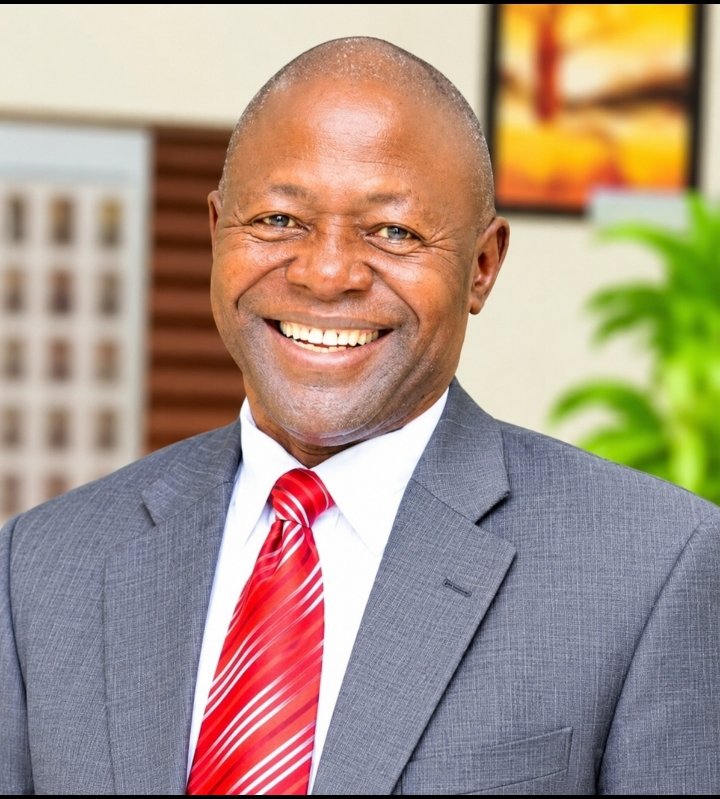
By Godwin Aliuna- A political Analyst/ Advocate of zoning/ good governance
The recent criticism of former Senator representing Ebonyi Central Senatorial District, Senator Julius Ali Ucha, over alleged lack of development in his Ezzagu hometown has raised important questions about political leadership, public accountability and how political achievements should be assessed.
However, while constructive criticism remains an essential component of democracy, a fair assessment of any political leader must be guided by facts, historical context and an understanding of the responsibilities attached to the offices previously occupied.
Responding to the criticism, a political analyst and advocate of good governance, Godwin Aliuna, has described the attempt to diminish Ucha’s political reputation on the basis of an alleged absence of personal development projects in Ezzagu as an incomplete assessment of the former lawmaker’s contributions to Ebonyi State and the country.
According to Aliuna, it is misleading to evaluate a politician who served at different levels of government exclusively through the number of physical projects that can be identified within his immediate community.
He argued that leadership contributions also include legislation, institutional development, policy formulation, political representation, oversight responsibilities and human capital development.
Senator Julius Ali Ucha occupies a significant place in Ebonyi State’s political history. He emerged as the pioneer Speaker of the Ebonyi State House of Assembly in 1999, following the creation of the state, and subsequently represented Ebonyi Central Senatorial District in the Nigerian Senate for two consecutive terms between 2003 and 2011.
These positions were not merely political titles but responsibilities that placed him at the centre of important legislative and institutional developments during the formative years of Ebonyi State.

His tenure as the first Speaker coincided with a period when the newly created state needed functional institutions, legal frameworks and administrative structures to establish its identity and development direction.
As pioneer Speaker between 1999 and 2003, Ucha presided over an Assembly that played a foundational role in the legislative development of the state.
Among the major institutions and facilities associated with the legislative initiatives of that period were Ebonyi State University, the university teaching hospital, the College of Education, the Women Development Centre, Nkaliki Hatchery and a fertilizer-making plant.
These institutions represent more than physical structures. They constitute important pillars of education, healthcare, agricultural development, women’s advancement and economic growth.
Their establishment helped lay the foundation for subsequent administrations to expand the state’s institutional capacity and provide opportunities for its growing population.
Aliuna maintained that the historical significance of Ucha’s speakership should not be ignored simply because some critics are more interested in identifying individual constituency projects than examining the broader institutional contributions of his administration as Speaker.
According to him, the establishment of enduring public institutions is a responsibility that requires legislative vision, collaboration and political commitment.
His subsequent election to the Senate in 2003 further expanded his political responsibilities beyond his immediate constituency. Representing Ebonyi Central Senatorial District, Ucha served until 2011, during which he occupied important committee positions and participated in legislative oversight on matters affecting national development.
One of his most significant committee responsibilities was his chairmanship of the Senate Committee on Works, an assignment that placed him in an important position within the legislative oversight framework for Nigeria’s road infrastructure sector.
He also served on committees covering Senate Services, Inter-Parliamentary Affairs, INEC and Commerce, among other responsibilities.
His position in the Works Committee was particularly relevant to Ebonyi State and the wider Southeast, where road infrastructure has remained a critical factor in economic integration, agricultural transportation and regional development.
The committee’s oversight responsibilities covered important national infrastructure programmes, including major highway projects connecting communities and commercial centres.
Among the major road projects associated with the infrastructure development of the period were the World Bank-backed Enugu-Abakaliki highway project, awarded to SETRACO, and the African Development Bank-backed Abakaliki-Ogoja highway project, awarded to CCECC.
Although these were federal and development-partner-funded projects, Ucha’s committee responsibility placed him within the legislative oversight structure for national road infrastructure.
It would therefore be historically inaccurate to discuss the infrastructure development of Ebonyi State during that period without examining the contributions of political representatives who occupied strategic legislative positions.
At the same time, such projects should be properly distinguished from personally executed constituency projects, as their financing and implementation involved different government institutions and agencies.
Beyond infrastructure and legislative oversight, Ucha’s public profile also reflects an interest in human capital development and social welfare interventions.
Through the Humanity Foundation, he has been associated with initiatives involving student scholarships and bursaries, women’s economic empowerment, healthcare assistance for disadvantaged residents and welfare support for inmates.
These interventions speak to another dimension of political service that is sometimes overlooked in the debate over leadership performance.
Education support can change the future of families, healthcare assistance can provide relief to vulnerable people, and economic empowerment can create opportunities for individuals who might otherwise remain excluded from meaningful participation in society.
Aliuna further argued that it is unfair to suggest that a politician has made no contribution to his people merely because critics cannot immediately identify a particular road, hospital or electricity project personally executed by him.
While infrastructure remains essential, the responsibilities of a legislator extend beyond direct project execution to lawmaking, representation, appropriation advocacy and oversight.
Nevertheless, the concerns expressed by the Ezzagu critic about roads, healthcare, schools, electricity and youth empowerment should not be dismissed. These are legitimate development priorities that deserve the attention of political leaders, traditional institutions, community stakeholders and successive governments.
However, the existence of outstanding development needs does not automatically invalidate the contributions of previous political officeholders.
It is also important to distinguish between the responsibilities of a senator and those of an elected local government chairman, state governor or federal minister. A senator represents constituents at the National Assembly, participates in national lawmaking, influences policy discussions and exercises oversight over government agencies.
Although senators can facilitate development projects and attract interventions, they do not independently control the execution of every road, hospital or electricity project within their communities.
For Ezzagu, therefore, the more productive conversation should be about how to consolidate on the political representation, institutional contributions and human development initiatives of its prominent sons while demanding greater investment from all levels of government.
Development should be a continuous process rather than an opportunity for political rivalry or the destruction of the reputations of individuals who have previously served the people.
Aliuna also maintained that Senator Ucha’s political experience, legal background and record of occupying important legislative positions remain valuable assets that should be examined objectively.
The fact that he served as the pioneer Speaker of the Ebonyi State House of Assembly before representing the state in the Senate for eight years demonstrates a long history of participation in the democratic development of Ebonyi State.
The argument, therefore, should not be whether Ucha deserves unquestioning praise or whether every criticism against him must be rejected. Rather, it should be whether his contributions are being evaluated fairly, whether available records are being acknowledged and whether the people of Ezzagu are willing to engage in a balanced conversation about the responsibilities of past and present political leaders.
It is equally important for his supporters to document specific projects, beneficiaries, interventions and legislative achievements associated with his years in public service. Verifiable evidence will strengthen his record and provide the public with a clearer understanding of his contributions.
Political loyalty alone cannot replace documentation, just as criticism without adequate investigation cannot constitute a credible assessment of leadership.
Ultimately, Senator Julius Ali Ucha’s political legacy deserves an assessment that goes beyond community sentiment and political disagreements. His role in the formative legislative history of Ebonyi State, his eight-year representation in the Senate, his committee responsibilities and his reported humanitarian interventions constitute important areas for public evaluation.
For Ezzagu, the priority should be development, unity and constructive political engagement. Its people deserve good roads, qu noality education, accessible healthcare, electricity, employment opportunities and sustainable empowerment programmes. But pursuing these aspirations should not require disregarding the historical contributions of those who previously occupied positions of responsibility.
As Aliuna concluded, political leaders should be held accountable, buty to p accountability must be rooted in facts, fairness and historical understanding.
Senator Julius Ali Ucha may not be beyond criticism, but neither should his years of legislative service be reduced to an allegation that he has nothing to show for his time in public office. Ezzagu deserves development, and it equally deserves a fair and honest account of its political history.