Crime
Benue govt Identifies over 1,800 victims forcefully recruited into bandits


……..identifies over 400 for rehabilitation.
From Attah Ede, Makurdi
The Benue State Government on Monday said it has conducted a shadow assessment on over 1,800 individuals who were captured and forcefully recruited into criminal groups in some parts of the State.
It further stated that as a result of the ongoing peace engagements embarked upon by the present government, over 400 of these victims had already surfaced in Katsina-Ala, expressing willingness to abandon criminal life and embrace rehabilitation.
Director General of the Benue State Peace and Reconciliation Commission, Ms. Josephine Habba, who disclosed this at a press conference held at the commission headquarters in Makurdi, maintained that the state government has concluded plan to establish a Demobilise, Deconstruct, and Reconstruct(DDR) centre in Anyiin, Logo local government area to cater those category of people in the State.
She discarded what it described as “mischievous misrepresentations” of the issues surrounding the planned rehabilitation facility in the state, explaining that the centre is designed to restore victims of forced recruitment into criminal groups rather than rehabilitate hardened terrorists.
According to her, the initiative must be understood within the broader context of Benue’s prolonged insecurity.owing to the fact that Benue became almost a theatre of conflict as there was a clear need to ensure that these conflicts are nipped in the bud, which was why the commission was established.
Haba explained that the commission’s work in the last years has focused on identifying and disentangling the multiple layers of violence affecting communities across the state, noting that while the herder and farmer crisis often dominates public discourse, it does not fully explain the complexity of Benue’s security challenges.
“There is confusion around conflict in Benue State. When you mention conflict, the big elephant people think about is the herder–farmer conflict. But that does not address the root causes of insecurity in the state”, Haba stated.
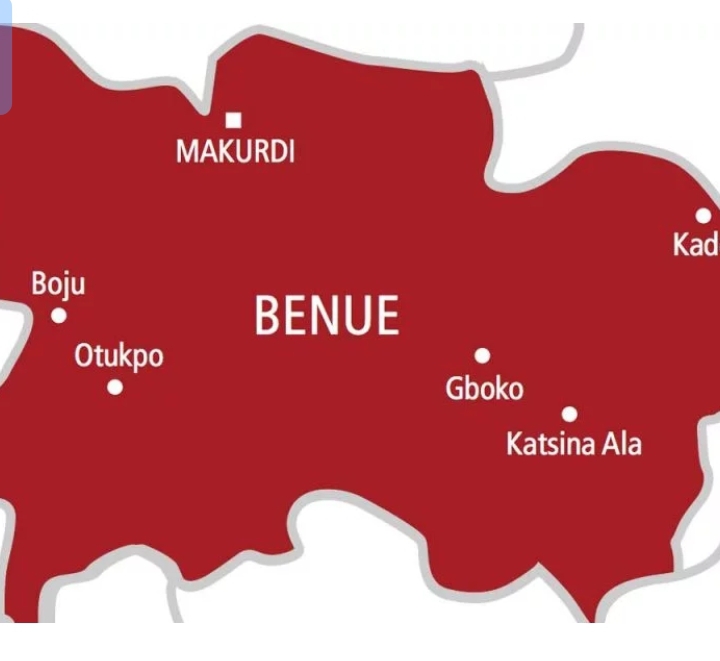
The DG pointed specifically to the Sankera axis — comprising Katsina-Ala, Ukum, and Logo — an area long plagued by armed banditry, kidnappings, and communal violence.
“We all know the story of Sankera,” she said. “The conflicts in that area are not a complete representation of farmers and herders. These are our children — young people drawn or forced into banditry.”

She recalled that in early 2024, Hyacinth Alia visited Katsina-Ala following disturbing reports presented during a meeting with the Catholic Diocese of Katsina-Ala.
“At that meeting, it was revealed that many of our children were abducted from markets, homes, and even while riding their motorcycles,” Habba recounted. “They were taken into the creeks to work for criminal gangs.”
She said these abductees were often used as foot soldiers or compelled to carry out dangerous errands for those hiding deep within forest enclaves. They were made to do the dirty jobs for those who could not risk coming out,” she said. “Sometimes women including pregnant women, were also taken to serve as cooks or errand runners.”
Following assessments conducted by the commission and other stakeholders, Habba disclosed that over 1,800 individuals were initially profiled as persons affected by forced involvement in bandit networks.
“These were the categories of persons presented to the governor,” she explained. “They are not the total criminals in the state, but people whose circumstances required careful evaluation.”
Based on this, Governor Alia adopted what she described as a “carrot approach. He said if these individuals are truly repentant and were not criminals before being taken into the bush, he would consider amnesty. A committee was subsequently set up to carry out discreet background checks the victims and “shadow assessments.
“You cannot simply conduct open assessments in such situations and we had to verify their histories carefully. From the exercise, the commission identified more than 1,170 individuals who reportedly had no prior criminal records before being coerced or recruited. Our goal“is to break the chain of recruitment into criminality. If those hiding in the bush have no foot soldiers, their operations will collapse.”, Haba said
She revealed that as a result of ongoing peace engagements, over 400 individuals had already surfaced in Katsina-Ala, expressing willingness to abandon criminal life.
The DG added that the operationalisation of the centre is expected to attract international collaboration, enhance security presence, and provide participants with start-up kits upon completion.
“They said they wanted to return to farming,” she said. “But we insisted they could not just go back like that. Communities might still see them as criminals, and their mindset needed correction. “We must first deconstruct what they have been through and then reconstruct them into productive members of our society”, she said.
This, she explained, informed the decision to establish a DDR process — Demobilise, Deconstruct, and Reconstruct, stressing that DDR is a recognised global framework operated by the military, funded and certified by the United Nations, adding that other states with lesser security challenges already host such centres.
“When I saw DDR centres in other regions, I told the governor and Bishop Dugu that Benue needed one tailored to its peculiar realities.
“At that stage, they would have been demobilised and restored as human beings again. Justice mechanisms would not be compromised, that is why the involvement of the Attorney General’s office became necessary.Those who must face justice will face justice,” she said. “Rehabilitation does not erase accountability.”, Haba noted.
She announced that the commission’s comprehensive peace framework would be formally unveiled at a peace summit scheduled for February 25, 2025.
According to her, the plan integrates rehabilitation with community resilience programmes, mental health support, restoration of livelihoods, and rebuilding of essential services such as schools and hospitals.
“We want seamless reintegration,” Habba concluded. “Not just for those leaving the bush, but for communities that have suffered trauma and destruction.”
The Benue State Government maintains that the initiative is a long-term investment in stability, aimed at dismantling cycles of violence by transforming vulnerable recruits into agents of recovery rather than returning them to stigma and suspicion.