Politics
How Faleke’s Political Ambitions Could Hurt Tinubu and the APC

By Simsim Jaga
The All Progressives Congress (APC) is confronting one of its most significant political setbacks in recent times following its defeat in the August 15, 2026, Osun State governorship election.
Governor Ademola Adeleke of the Accord Party secured re-election with 511,067 votes, defeating the APC candidate, Bola Oyebamiji, who polled 444,815 votes.
Beyond the numbers, however, the election exposed deep divisions within the APC and renewed questions about the influence of powerful political actors around President Bola Ahmed Tinubu.
Among those whose growing political influence is attracting attention is Hon. James Abiodun Faleke, a member of the House of Representatives and a prominent figure within the Tinubu political network.
Osun Defeat and the Internal Blame Game
In the aftermath of the election, the Osun APC Stakeholders Forum wrote an open letter to President Tinubu, attributing the party’s defeat to what it described as the concentration of political appointments and elective positions within the political camp of former Governor Gboyega Oyetola.
The group alleged that Oyetola’s camp played a dominant role in determining the party’s candidates, including the governorship and deputy governorship candidates, three senatorial candidates, nine House of Representatives candidates and 26 House of Assembly candidates.
It also alleged that 25 federal appointments were concentrated around the same political bloc.
Those allegations have intensified the debate over the internal structure of the APC in Osun and whether the party’s political machinery has become too concentrated in the hands of a few influential actors.
But while Oyetola has come under criticism from party stakeholders, a parallel conversation has emerged around Faleke’s role in the broader political strategy of the APC.
Allegations Surrounding Faleke
Several allegations concerning Faleke have circulated on social media and in political circles, including claims about his involvement in political developments outside Osun and his alleged influence over federal contracts and appointments.
One such allegation links him to the political crisis that affected the Edo State House of Assembly and eventually resulted in a change of leadership.
Another allegation claims that Faleke has invoked the name of the President in efforts to influence the award of federal contracts, including contracts associated with electoral activities.
These allegations remain unproven and should not be treated as established facts without independent evidence. However, their circulation highlights the growing scrutiny surrounding Faleke’s proximity to the presidency and the extent of his political influence.
Faleke was actively involved in the APC campaign in Osun and supported the party’s governorship candidate, Bola Oyebamiji.
His involvement became particularly visible during the election when Afrobeat singer Davido accused him of attempting to influence INEC’s handling of the results.
Faleke rejected the allegation, insisting that INEC could not be influenced by him or anyone else and maintaining that he had neither rigged an election nor intended to do so.
The exchange nevertheless added another layer to an already tense election and reinforced public debate about the activities of political actors surrounding the contest.
The Accord Party had also raised concerns over an alleged closed-door meeting involving Faleke and selected APC leaders, claiming that plans to manipulate the election were discussed.
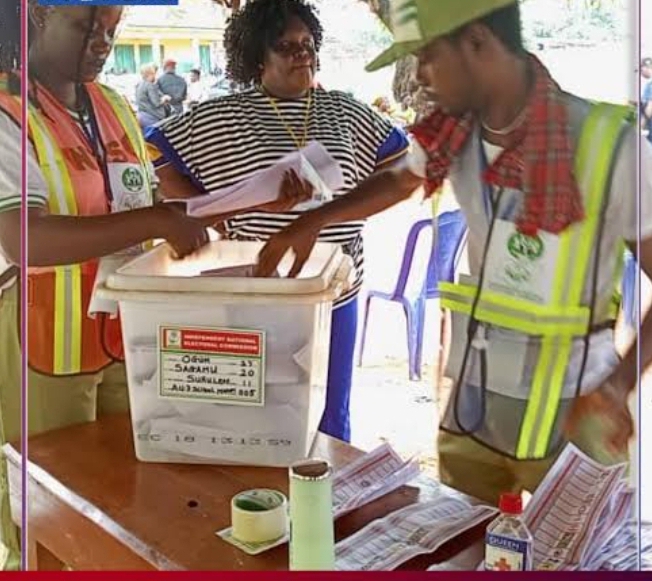
Whether those allegations are substantiated remains a matter for investigation. What is undeniable, however, is that the controversy has contributed to the perception of a highly centralised political operation within the APC.
Perhaps the most important question is not where Faleke stands today, but where his political trajectory is taking him.
His career has taken him from the Lagos political establishment to the National Assembly, where he has become one of the more influential lawmakers associated with the Tinubu political structure.
His supporters see him as a dependable political operative who has helped strengthen the President’s network and facilitated federal appointments for people from Kogi State.
There is also growing support for his possible governorship ambition in Kogi State, particularly from groups advocating for the emergence of a governor from Kogi West.
At the same time, some of his associates have reportedly urged him to remain focused on Tinubu’s 2027 re-election campaign rather than pursue an ambition that could destabilise the APC’s existing structure in Kogi.
The competing narratives illustrate the uncertainty surrounding Faleke’s long-term political plans.
President Tinubu has entrusted Faleke with a significant responsibility in the 2027 campaign structure, appointing him Deputy Director-General for Election Planning, Coordination and Monitoring.
The appointment reflects the level of confidence placed in him by the presidency.
But it also carries considerable responsibility.
As one of the figures expected to contribute to the APC’s electoral strategy, Faleke will inevitably attract scrutiny over the party’s performance in the states where the campaign machinery operates.
The challenge for the presidency is therefore to ensure that political influence does not become concentrated around individuals or factions at the expense of broader party interests.
Claims that Faleke has monopolised federal contracts or influenced appointments in ways that favour a particular network should, if formally presented, be subjected to appropriate scrutiny rather than allowed to fester as political rumours.
Likewise, claims concerning alleged relationships between his associates or relatives and officials connected to electoral institutions require evidence and proper verification.
The Osun election should serve as a warning to the APC that internal cohesion is just as important as electoral mobilisation.
While the party has blamed different individuals and factions for its defeat, the more important task is to establish what went wrong and ensure that similar mistakes are not repeated ahead of the 2027 general elections.
For President Tinubu, this requires looking beyond opposition politics and paying close attention to the dynamics within his own political camp.
Powerful allies can strengthen a presidency, but unchecked political ambitions can also become liabilities.
Faleke may well be a committed ally of President Tinubu and an important asset to the APC. But if allegations of excessive influence, factional control and political overreach continue to gain traction, the presidency cannot afford to ignore them.
The central issue, therefore, is not whether Faleke should be prevented from pursuing legitimate political ambitions. It is whether those ambitions are being pursued in a manner that strengthens or weakens the Tinubu presidency and the APC.
With 2027 approaching, that distinction could prove decisive.