
Security
Ezza Women protest against Violence, Invoke Ancestors on Politicians Behind Bloodsheds

By Uchenna Okeh
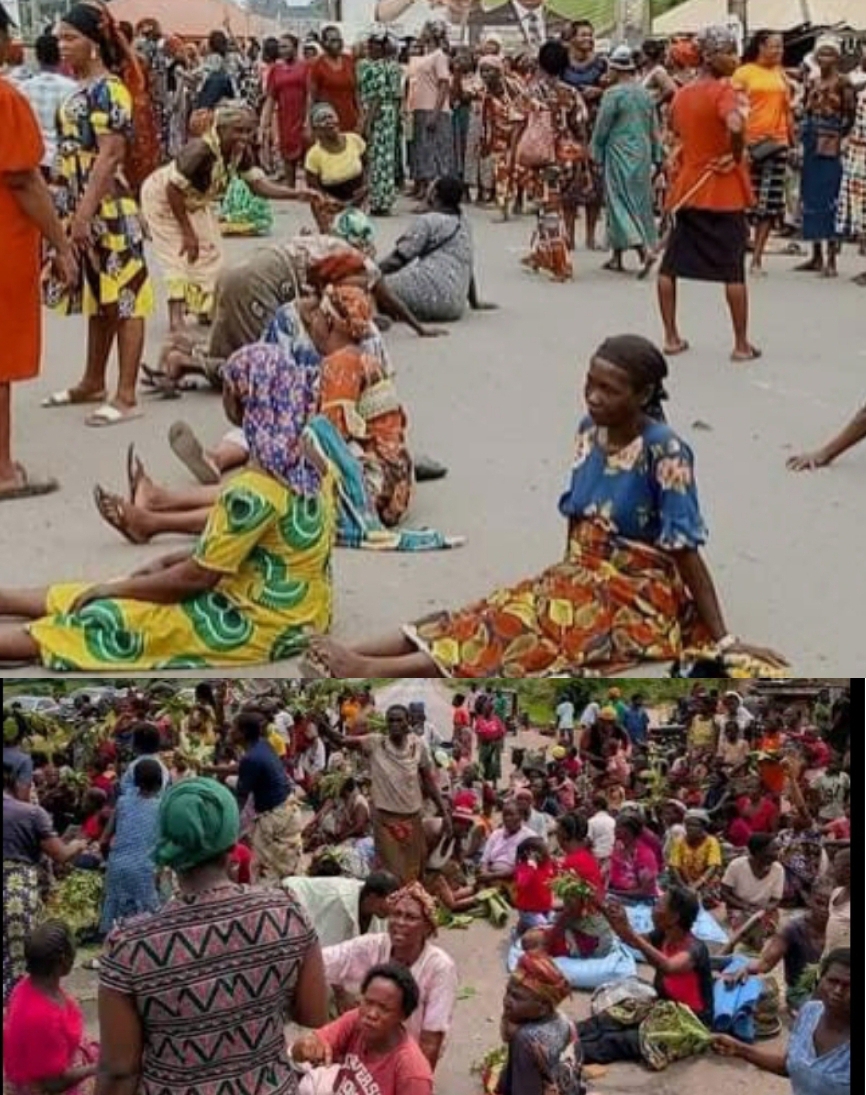
Elderly women from the Ezza Nation in Ebonyi State have staged an unusual overnight traditional protest against alleged political violence in Onueke, Ezza South local government area of Ebonyi State.
The Nations News reports that the protesters warned those they accused of sponsoring the violence to stop the bloodshed or face what they described as the “wrath of the ancestors.”
The women, drawn from the 12 tribes of Ezza Nation and joined by representatives of communities regarded as offspring of Ezza’s brothers, began their procession from Eke Imeoha Market Square between 2am and 4am.
They sang, wailed and performed traditional rites as they moved through Nchonu, Onicha Igboeze, Nkerefi in Enugu State and Ugwulamgwu.
At Nchonu, a sacred site associated with Ezekuna, regarded in Ezza tradition as the progenitor of the Ezza Nation, the women reportedly stripped naked before performing traditional rites.
Their spokesperson, Mrs Angelina Ucha, said the act was part of the traditional requirements for approaching the sacred site and was not intended as a publicity stunt.
The women accused unnamed individuals and their alleged sponsors of fueling political violence and demanded an immediate end to the killings.

They also demanded traditional appeasement involving a giant native cow, a white hen and alligator pepper, with the rites to be performed at the graveside of Ezekuna.
Ucha said the group had given those responsible for the alleged violence seven days to “do the needful.”
She said the protest was not in support of any political party or candidate but was aimed at protecting the lives of Ezza people.
“We are tired of seeing our children die because of politics. We are tired of useless shedding of blood,” Ucha said.
She urged politicians, traditional rulers and religious leaders to intervene and prevent further violence.
According to her, the women deliberately excluded those of child-bearing age from the traditional procession because of cultural purity requirements associated with the rites.
She also said the latest action was not the first time Ezza women had resorted to traditional intervention during periods of crisis.
Ucha recalled similar processions in 2003 and 2010, saying the women had previously marched to Nchonu when they believed the Ezza community was under serious threat.
She also recounted an alleged incident involving a former governor at a traditional chieftaincy ceremony, which she attributed to ancestral intervention.
The claim reflects the women’s traditional beliefs and has not been independently established.
The women called on politicians and their supporters to end violence, intimidation and retaliation, warning that political positions were temporary while lives lost could never be recovered.
They also urged religious leaders to intensify their campaign against political violence and promote reconciliation among opposing groups.
The seven-day ultimatum is now the central message of the protest.

Ucha warned that those allegedly responsible for the violence and their sponsors should make peace with the land and carry out the demanded traditional rites.
“Politics will come and go. Positions will come and go. But the blood of our people cannot be brought back once it is shed,” she said.