Politics
2027: Why Ezza Elders’ Meeting targets Unity, Security, shapes political future of Ezza Clans- Aliuna reveals

By Uchenna Okeh
As the political permutations ahead of the 2027 governorship election in Ebonyi State gather momentum, the forthcoming meeting of the Ezza Ezekuna Elders’ Council is emerging as an important platform for discussions on political unity, security, leadership continuity and the future of the state’s zoning arrangement established by its founding fathers.
Scheduled for Saturday, October 31, 2026, the meeting, which will be hosted by a two-term former member of the House of Representatives and prominent Ezza political leader, Hon. Ugo China, popularly known as Ohagolode, at his hometown in Ezza South Local Government Area, is expected to bring together influential elders, political stakeholders and other prominent sons and daughters of Ezza nation.
Beyond its immediate objective of addressing security challenges and strengthening communal relationships, the gathering is expected to provide an opportunity for Ezza political leaders to examine their collective position on Governor Francis Ogbonna Nwifuru’s second-term ambition and the implications of the 2027 political transition for the long-term governorship aspiration of Ezza nation.
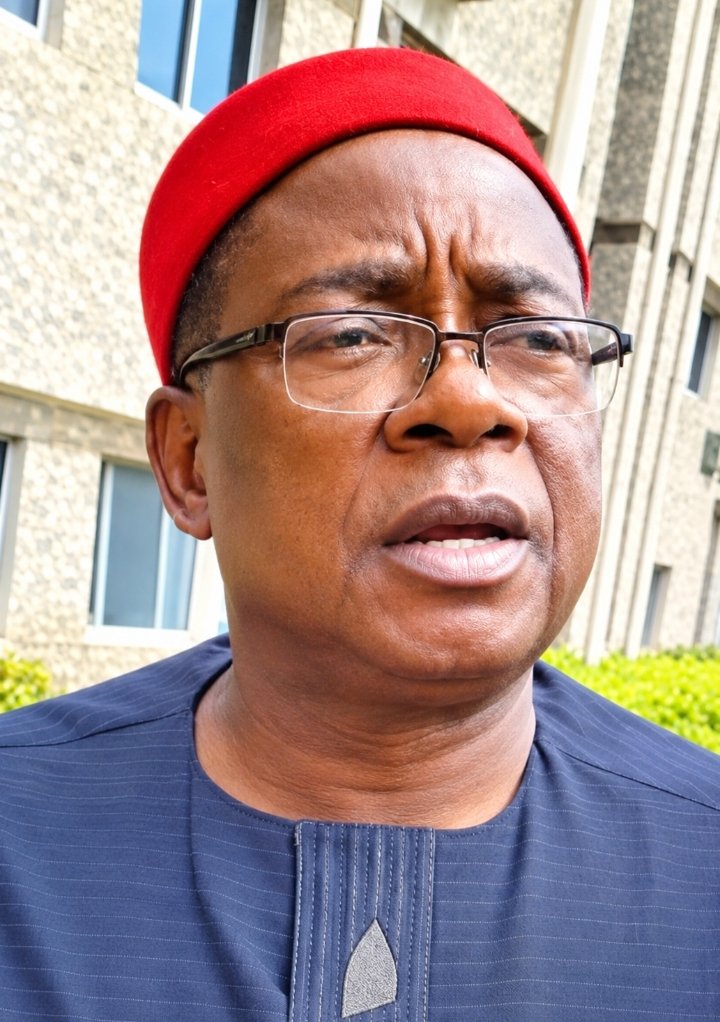
The former House of Representatives candidate for Ebonyi Ohaukwu Federal Constituency, Aliuna Godwin, who explained the significance of the meeting, said the gathering was necessary to consolidate unity, discourage political hostility and establish a common understanding among Ezza stakeholders on issues affecting their political future.

According to him, Ezza nation must recognise the importance of collective engagement at a period when political competition, internal disagreements and security concerns threaten to undermine relationships among communities.
He maintained that the elders’ intervention would provide an opportunity to reconcile differences and encourage political leaders to place the collective interest of the people above personal ambitions.
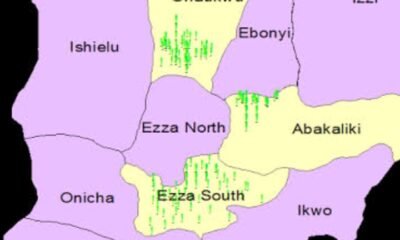
The renewed emphasis on unity is particularly significant following reported security incidents in parts of Ezza South and Ezza North, including attacks, killings and destruction of property allegedly connected to political disagreements.
The incidents have heightened concerns about the consequences of allowing political rivalry to degenerate into violence and hostility among people who share common ancestral, cultural and historical identities.
For the Ezza Ezekuna Elders’ Council, therefore, the challenge goes beyond issuing appeals for peace. It involves creating an enduring framework through which political disagreements can be resolved, political actors held accountable and the safety of residents guaranteed, irrespective of their party affiliations or preferred candidates.
However, the political dimension of the meeting is equally significant. Aliuna believes that the relationship between Ezza nation and the Nwifuru administration deserves serious consideration, particularly as the governor prepares for the 2027 re-election contest under the platform of the All Progressives Congress (APC).
He argued that the political conversation surrounding Nwifuru’s second-term ambition should be examined within the broader context of the zoning understanding established by Ebonyi’s founding fathers.
According to him, the historical arrangement was intended to promote fairness, political inclusion and a sense of belonging among the state’s component communities.
The argument supporting Nwifuru’s re-election, as advanced by Aliuna, is that continuity in government could provide an opportunity for the administration to consolidate its development programmes while maintaining the political understanding that underpins the state’s zoning arrangement.
He also believes that the governor’s second term could become an important subject of discussion in relation to Ezza’s 2031 governorship aspiration.
At the centre of this calculation is the expectation that Ezza nation could become a beneficiary of the governorship zoning arrangement in 2031, following the completion of Nwifuru’s constitutionally permitted tenure, should he secure re-election.

Aliuna considers the relationship between the incumbent governor and Ezza political stakeholders relevant to discussions about that future aspiration, although any eventual succession arrangement would require wider political consultation and consensus.
Indeed, the founding fathers’ zoning formula remains an important reference point in Ebonyi’s political history. Its relevance lies in the principle that political power should not become the exclusive preserve of any particular group but should provide opportunities for different communities to participate in the leadership of the state.
Preserving that understanding requires political maturity, mutual trust and respect for agreements among stakeholders.
This is where the Ezza Ezekuna Elders’ Council assumes considerable importance. As a traditional platform for engagement among influential sons and daughters of Ezza nation, its intervention could help provide direction on how the community approaches the 2027 political contest without compromising its longer-term aspirations.
The ability to accommodate differing political opinions while promoting constructive engagement will be central to the credibility of its resolutions.
Another important consideration is the need for Ezza political gladiators across party lines to recognise that the community’s collective interests extend beyond electoral victories.
While the APC remains the platform of the incumbent governor, other political parties and their candidates must also be allowed to exercise their democratic rights and campaign freely. Peaceful participation, rather than intimidation or political exclusion, remains essential to credible elections.
Aliuna has consequently urged political stakeholders from Ezza extraction to embrace peaceful engagement, avoid inflammatory statements and discourage supporters from resorting to violence.
He also called for campaigns across Ezza land to be conducted without bloodshed, attacks or destruction of property, stressing the importance of protecting relationships that have existed among communities for generations.
Ultimately, Saturday’s meeting presents the Ezza Ezekuna Elders’ Council with an opportunity to address two interconnected questions: how to preserve peace and unity in Ezza land ahead of 2027, and how to navigate the political relationship between Nwifuru’s re-election ambition and the community’s anticipated 2031 governorship aspiration.

The outcome will be measured not simply by the political positions adopted but by the council’s ability to promote dialogue, preserve the founding fathers’ zoning understanding and encourage peaceful democratic participation.
For Ezza nation, the meeting could mark an important moment in defining how its historical identity, present political interests and future leadership aspirations are accommodated within the broader political future of Ebonyi State.