Feature
2027: How Media Snub, internal rift, Others Could Make or Mar Adamu’s Governorship bid in Nasarawa

From Abel Zwanke, Lafia
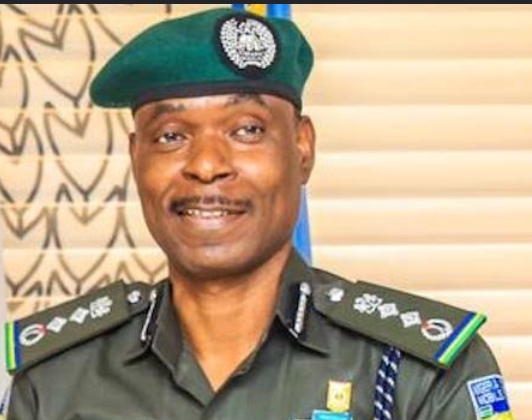
As political activities gradually gather momentum ahead of the 2027 governorship election in Nasarawa State, the entrance of former Inspector-General of Police, Mohammed Adamu, into the race continues to generate mixed reactions within the ruling All Progressives Congress (APC) and beyond.
While his supporters tout his national experience and security credentials as strong assets, a growing number of stakeholders within the state are expressing concerns over what they describe as missteps capable of undermining both party cohesion and grassroots acceptance.
One of the major issues raising eyebrows is his approach to media engagement. Observers within the state’s media space argue that the former IGP has consistently leaned on correspondents from national media organisations who are not resident in Nasarawa state, rather than engaging journalists who operate within the state and understand its peculiar socio-political realities.
A Lafia-based journalist, who spoke on condition of anonymity, said the development creates a disconnect between the aspirant and the people.
“When you consistently engage outsiders to interpret local realities, it sends a message that those on ground are not valued. The correspondents here understand the terrain, the communities, and the issues. They ask the right questions because they live the reality,” he said.
Political analysts say this pattern may not only alienate local media practitioners but could also weaken public trust, especially in a state where grassroots engagement remains a critical determinant of political success.
Closely tied to this concern, analysts observed that the composition of the ex-IGP’s political camp seems weak. Within APC circles, murmurs have grown louder over the calibre of individuals surrounding him. Critics argue that many of his loyalists lack electoral value and are not deeply rooted in the local political structure, raising questions about their ability to mobilise support at the grassroots level.

A party chieftain in Keffi Danjuma Musa expressed reservations, noting that “politics is not about titles or proximity to power. It is about influence and the ability to win votes. If the people around you cannot deliver even at the ward level, then they become a burden rather than an asset.”
The issue, according to insiders, alleging that some members of his camp are more interested in securing positions for themselves than building a broad-based and inclusive political movement. This, they warn, could limit his appeal within a party that already has established structures and long-standing loyalists.
Another major point of contention is the perceived tension between the former IGP’s camp and the administration of Governor Abdullahi Sule. Some stakeholders believe that certain actions and utterances by groups aligned with the aspirant are gradually creating an atmosphere of subtle opposition to the sitting governor, a development they fear could destabilise the party ahead of the election.
A political observer in Lafia noted that “there is a thin line between ambition and confrontation. When support groups begin to act in ways that appear to challenge the authority of the governor, it creates unnecessary tension. The APC in Nasarawa has been relatively stable, and anything that threatens that stability should be carefully managed.”
Indeed, concerns are mounting that the unfolding situation could foster division within the party if not addressed early. Some party members accuse the ex-IGP’s camp of encouraging narratives that undermine the governor’s leadership, thereby creating an environment of disobedience and mistrust.
Compounding these concerns is the scale of the former IGP’s political outreach, which insiders say has involved the deployment of significant financial resources. He is reported to have spent billions of naira on relief materials and extensive visits to stakeholders across the state in a bid to consolidate support.
While these efforts have been acknowledged as a demonstration of capacity and reach, critics argue that they may not yield the desired political dividends if not properly aligned with existing grassroots structures.
Some stakeholders insist that the strategy appears to overlook critical actors within the local political ecosystem. They argue that when key community influencers, ward-level mobilisers, and state-based media practitioners are not adequately carried along, such large-scale interventions risk losing their intended impact.
A media practitioner in Lafia observed that “visibility is not just about distribution of materials or high-profile visits. It is about how the message is communicated and who tells the story. If the local media is sidelined, the narrative may not resonate with the people at the grassroots.”
Political watchers further warn that the perceived rift between the former IGP’s camp and the state government could prove costly. According to them, without a working relationship or at least tacit support from the incumbent administration, the path to securing the party’s ticket, and ultimately winning the election, may become significantly more difficult.
“The governor remains a central figure in the party’s structure in the state,” another party source noted. “If there is no alignment or understanding, it could affect the chances of any aspirant, no matter how strong.”
Beyond internal party dynamics, the issue of zoning has also resurfaced as a critical factor in the 2027 race. While the former IGP is said to favour an open contest, many stakeholders insist that zoning remains an unwritten but respected principle in Nasarawa politics, aimed at ensuring equity and inclusiveness among the state’s diverse regions.
A youth leader from Nasarawa South argued that “zoning may not be in the constitution, but it is part of our political understanding. Ignoring it completely could create resentment and deepen divisions.”
The stance has placed the ex-IGP at odds with some influential figures within the APC who are believed to be pushing for power to shift to the western zone. The situation has further complicated the already delicate political calculations ahead of the election.
Equally significant is the question of political integration. The former IGP’s relatively recent alignment with the APC in the state has not gone unnoticed, with some long-standing members expressing concerns over what they see as an attempt to quickly dominate the party’s structure.
A senior party member in Akwanga remarked: “There are people who have built this party from the ground up, through difficult times. It is only fair that their contributions are respected. You cannot come in and expect to take over without building relationships and earning trust.”

This sentiment reflects a broader concern about loyalty and recognition within the party. For many grassroots politicians, the fear is that established structures may be sidelined in favour of new alliances, potentially weakening the party’s foundation.
Despite these criticisms, supporters of the former IGP remain optimistic about his chances. They argue that his experience as Nigeria’s top police officer gives him a unique advantage in addressing security challenges and attracting federal attention to the state.
A member of his support group, Bello Ahmed dismissed the criticisms as typical of pre-election politics, stating that “every serious aspirant will face opposition. What matters is the capacity to lead, and he has demonstrated that at the highest level. Nasarawa needs someone with national reach and influence.”
However, even among his supporters, there is an acknowledgment that greater engagement with local stakeholders will be essential moving forward. Political analysts emphasise that success in Nasarawa requires more than credentials, it demands deep connection with the people, respect for existing structures, and the ability to build consensus across different interest groups.
As the political tension continues to evolve in Nasarawa state, the unfolding debate around the former IGP’s ambition highlights the complex interplay of power, perception, and strategy in Nasarawa politics. With multiple interests at stake and alliances still forming, the road to 2027 is expected to be both competitive and unpredictable.
For now, the former police chief stands at a critical juncture. How he approaches these early challenges, balancing ambition with inclusivity, financial influence with strategic grassroots engagement, and political assertiveness with party unity, may ultimately determine not only his political future but also the stability of the APC in Nasarawa State.