Politics
Tinubu: Bakassi Deep Seaport to Transform Nigeria’s Maritime Economy

By Ene Asuquo, Calabar
President Bola Ahmed Tinubu has described the groundbreaking of the Bakassi Deep Seaport in Cross River State as a defining milestone in Nigeria’s economic diversification drive, saying the multi-billion-dollar project will transform the country’s maritime economy, create thousands of jobs and strengthen its competitiveness in regional and international trade.
Tinubu, who spoke on Friday, November 13, 2026, through Vice President Kashim Shettima at the groundbreaking ceremony in Bakassi, described the project as a strategic national investment that would open new commercial corridors, stimulate industrialization and unlock the economic potential of Nigeria’s Gulf of Guinea coastline.
The President commended Cross River State Governor, Senator Bassey Edet Otu, and the people of the state for sustaining the vision and overcoming the institutional, financial and administrative obstacles that had delayed the project since its conception in 2014.
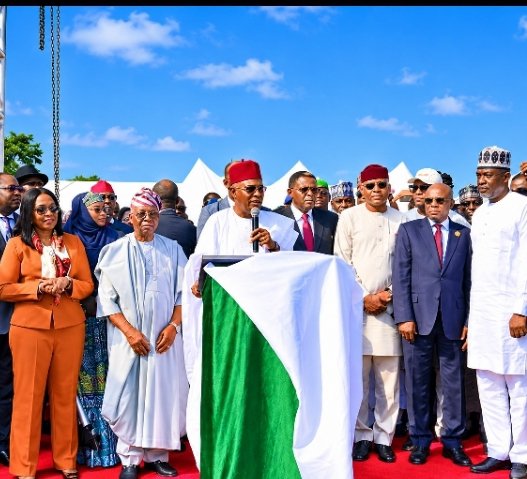

He recalled that the project’s Environmental and Social Impact Assessment was developed in March 2015 but received renewed attention under the Otu administration.
Designed with a 20-metre draft to accommodate large vessels that currently bypass Nigerian ports, the seaport is expected to serve as a major maritime gateway, supported by a 260-kilometre superhighway that will facilitate the movement of cargo to markets across the country.
Tinubu attributed the renewed progress to Governor Otu’s determination, particularly his efforts towards securing a $3.5 billion financing arrangement with the African Export-Import Bank (Afreximbank) and formalising the Public-Private Partnership framework in February 2025.
“This is beyond a Cross River dream. It is a Nigerian project. It is a poverty breaker,” the President declared.
Addressing concerns about the relationship between the proposed port and existing maritime facilities in Lagos, Tinubu maintained that the Bakassi project was designed to complement, rather than undermine, Lagos’ position as Nigeria’s commercial centre.
“Lagos is not our enemy. Lagos is our elder brother in trade. No country eats with one hand. No country carries all its loads on one shoulder. That shoulder will break,” he said.
He observed that more than 80 per cent of Nigeria’s foreign trade currently passes through Lagos, contributing to congestion and increased operational costs, and argued that an additional major maritime gateway would distribute economic activities, improve efficiency and strengthen the national economy.
“When Calabar works, Nigeria works on two legs,” he added.
The President further noted that Nigeria had yet to fully exploit its strategic coastline along the Gulf of Guinea, despite the enormous opportunities available in maritime transportation and regional commerce.
He said the Bakassi Deep Seaport would help retain cargo currently diverted to neighbouring countries, improve access to international markets, reduce dependence on a single maritime gateway and enable Nigeria to capture a larger share of regional shipping activities.
Tinubu also acknowledged the historical and economic setbacks suffered by Cross River State following the international ruling on the Bakassi Peninsula and the subsequent loss of oil revenue, but urged the people not to allow those developments to undermine their aspirations.
“The peninsula was not the end of your story, but the beginning of your next chapter,” he declared, urging residents to protect the project from political interference and regard it as an economic inheritance for future generations.
Earlier, Governor Otu described the groundbreaking as a historic turning point in the state’s economic development, crediting Tinubu’s Renewed Hope Agenda with providing the federal government’s decisive support for the revival and actualisation of the project.
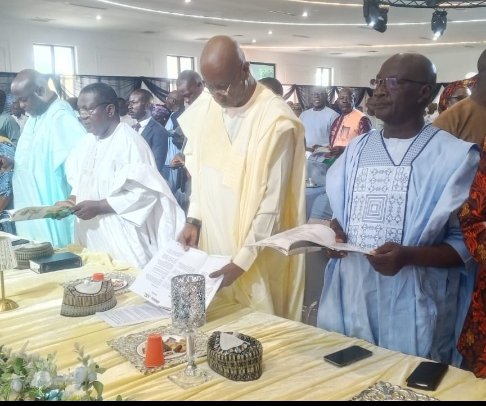

Otu said the seaport had experienced years of political, administrative, legal and environmental challenges until the Federal Government’s renewed commitment to expanding and upgrading Nigeria’s maritime corridors created a fresh opportunity for its implementation.
He commended Tinubu for guiding the state through the processes leading to the Certificate of Compliance and final federal approval, describing the President as “a bastion of economic diversification and social equity.”
The governor recalled Calabar’s longstanding maritime heritage, saying the new facility would reinforce Cross River’s position as a littoral state and restore its relevance in international maritime commerce.
He disclosed that the state government had completed several preparatory activities, including the Environmental Impact Assessment, hydrographic, geotechnical and geophysical surveys, while securing the necessary federal approvals for the project.
According to him, the seaport will be delivered through a Public-Private Partnership arrangement, with an initial funding approval of $2.27 billion.
Otu explained that the project would stimulate activities across logistics, international trade, fishing, shipping, tourism and shipbuilding, positioning Cross River as a major maritime and industrial hub along the Gulf of Guinea.
He further disclosed that technical surveys conducted for the project exposed inaccuracies in the 1903 navigational charts, which the Federal Government subsequently replaced on October 1, 2026, reaffirming the state’s littoral status.
The governor also revealed that selected indigenes of Cross River were undergoing specialised training to equip them for construction and operational responsibilities, with arrangements for knowledge transfer to ensure local participation in the project.
He identified the state’s emerging three-pronged economic corridor, comprising the airport, the proposed seaport and the Lagos-Calabar Coastal Highway, as a strategic infrastructure network expected to facilitate cargo transportation, attract investments and expand commercial activities.
Otu consequently invited local and international investors in maritime transportation, logistics, manufacturing and allied industries to explore the investment opportunities offered by the project.
He assured prospective investors of the state’s business-friendly environment, including a one-stop investment hub and tax incentives, while calling on development partners to support efforts towards building a resilient and diversified economy.
In his goodwill remarks, the Minister of Marine and Blue Economy, Dr Gboyega Oyetola, commended Tinubu for initiating reforms aimed at unlocking Nigeria’s maritime potential, including the establishment of the Ministry of Marine and Blue Economy in 2023 and approval of the country’s first National Policy on Marine and Blue Economy.
Oyetola disclosed that revenue generated by agencies under the ministry increased from N700.79 billion in 2023 to N1.83 trillion in 2025, attributing the growth to improved revenue assurance mechanisms and the elimination of financial leakages.
He also listed the elimination of piracy in Nigerian waters, approval for the modernisation of six legacy seaports, improved port governance through the Nigerian Ports Economic Regulatory Act and Nigeria’s election into the decision-making Council of the International Maritime Organization after almost two decades among the administration’s maritime achievements.
The minister further cited the lifting of United States Coast Guard restrictions on Nigerian-bound vessels in August 2026, the release of the Cabotage Vessel Financing Fund to shipowners and an increase in fish production from 1.1 million to 1.4 million tonnes.
He said the Bakassi Deep Seaport would expand market access, stimulate industrial development, attract investments and generate employment opportunities, particularly when integrated with the Lagos-Calabar Coastal Highway.
Oyetola assured that the ministry would support the development of a modern, efficient and environmentally sustainable port, describing the project as an important instrument for converting Nigeria’s maritime advantages into sustainable economic growth.
He maintained that the groundbreaking represented a significant shift in Nigeria’s maritime geography, offering Cross River State an opportunity to transform its coastal location and maritime heritage into investments, employment and sustained economic activities.
The project, he added, would also contribute to national economic diversification, ease pressure on existing ports and strengthen Nigeria’s position as a leading maritime and commercial destination in West Africa.