2027: Haske’s Ex-Aide Mobilizes Social Media Army, Targets Adamawa Voters

From Yagana Ali, Yola

A former aide to Abdulrahman Bashir Haske, the governorship candidate of the Allied Peoples Movement (APM) in Adamawa State, Abdul Zubair, has mobilized social media supporters in Girei Local Government Area to intensify awareness of the candidate’s ambition ahead of the 2027 governorship election.

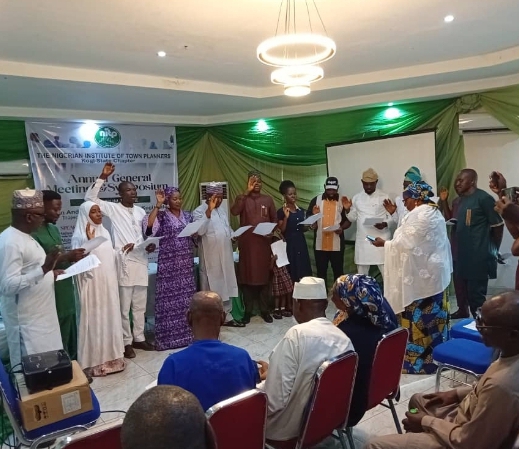
Zubair reportedly empowered members of the Girei Social Media Support Group as part of efforts to strengthen the party’s visibility, expand its reach and promote Haske’s political agenda across the state.

The mobilisation brought together party stakeholders and social media supporters, who pledged to deploy digital platforms to publicise the activities of the APM and communicate its message to residents of Adamawa.

Speaking on behalf of the group, one of the supporters, Manasa Pious, said members were prepared to take up the responsibility of promoting the party and its governorship candidate beyond Girei.


Pious explained that the group’s activities would extend across Adamawa State, noting that members were committed to using social media to increase public awareness of Haske’s political ambition and the party’s activities.

He said the supporters would leverage digital communication platforms to disseminate information, engage residents and draw attention to the APM’s political programmes as the 2027 election approaches.

According to him, the group is determined to contribute to the party’s visibility through coordinated online engagement and grassroots mobilisation.

The initiative underscores the increasing importance of social media in political communication, particularly as political parties and aspirants seek to reach voters, shape public opinion and build support ahead of the next general elections.

Also speaking, the APM Chairman in Girei Local Government Area, Hon. Umar Hammangobdo Dagkiri, welcomed Zubair’s gesture, describing the mobilisation as a demonstration of commitment to the party’s growing political activities.

Dagkiri said the initiative would contribute to efforts to strengthen the party’s presence at the grassroots and encourage supporters to participate actively in promoting its candidate.

The party chairman also addressed speculation in some quarters over the possibility of the Independent National Electoral Commission (INEC) excluding Haske from the 2027 governorship race.

He expressed confidence in Haske’s candidacy, claiming that the candidate’s name had appeared on a recently published INEC list.

Dagkiri maintained that the development should reassure supporters, although the candidate’s official status would ultimately depend on INEC’s authoritative records and announcements.

The question of candidate recognition and eligibility remains significant for political parties as preparations for the 2027 elections gather momentum, with aspirants and their supporters closely monitoring electoral developments.

In a related development, the APM Ward Chairman in Damare, Pastor Sunday Andrew, said the party was prepared to demonstrate its political strength through organised activities and sustained grassroots engagement.

Andrew expressed confidence in the commitment of party members and supporters, saying they were ready to work towards the party’s objectives and expand its influence across Adamawa State.

He stressed the importance of coordinated mobilisation and active participation by members in advancing the party’s political activities ahead of the election.

The Girei mobilisation reflects the growing emphasis on digital campaigns in Nigeria’s political landscape, where social media platforms have become important tools for disseminating information, engaging supporters and communicating campaign messages.


As political activities intensify ahead of 2027, the APM’s mobilisation efforts in Girei signal its supporters’ determination to raise Haske’s profile and strengthen the party’s visibility across Adamawa State.


2027: ITF President Urges Izhi Voters to Prioritize Merit, Performance

By Eze Victor

The National President of the Izhi Tehu Foundation (ITF), Christopher Agbo, has urged the people of Izhi Clan in Ebonyi State to base their choices of political leaders in the 2027 general elections on competence, character, antecedents and demonstrable performance rather than kindred affiliation.

Agbo, who is also a Senior Manager at the Central Bank of Nigeria, made the call while speaking with journalists in Ebonyi State, where he faulted the practice of allocating elective and appointive positions primarily on ethnic, religious or kindred considerations.

He was reacting to recent remarks attributed to Governor Francis Ogbonna Nwifuru concerning the balancing of political positions between the two major kindreds in Izhi Clan ahead of the 2027 elections.

Nwifuru had spoken about the need for political balance within the clan in the context of equity, social justice and political accommodation, saying such an arrangement could promote stability and peaceful coexistence.

Agbo, however, argued that while equity and communal harmony were important, they should not replace the constitutional role of voters in determining who represents them at the various levels of government.

“One of the major problems in Nigeria that has continued to contribute to underdevelopment and bad governance is the practice of appointing people into public positions based on ethnicity and religion instead of good character, competence and outstanding performance,” he said.

The ITF president urged voters to scrutinise the records, capacity, character and achievements of all aspirants before making their choices, stressing that kindred affiliation should not be the principal consideration.

He said the principle should apply to all contestants within Izhi Clan, including Senator Onyekachi Nwebonyi and other aspirants seeking elective positions in 2027.

“Any decision to support a particular candidate should be based on brilliant performance and not kindred,” Agbo said.

Beyond politics, Agbo called for a comprehensive restructuring of the Ebonyi State Government’s cabinet and administrative architecture, particularly as the administration prepares for its next phase.

He advised the governor to give greater consideration to professionals, accomplished business leaders and people with relevant technical expertise, exposure to innovation and a demonstrated commitment to public service.

According to him, restructuring the government should also be accompanied by measures to reduce the cost of governance and eliminate overlapping responsibilities among ministries, departments and agencies.

Agbo specifically questioned the need for separate portfolios covering works, infrastructure concession, project monitoring and rural development, arguing that some responsibilities could be consolidated to improve coordination and efficiency.

“What is the need for having the Ministry of Works, Ministry of Infrastructure for Concession, Ministry of Projects Monitoring and another Commissioner for Rural Development?” he queried.

He proposed that the Ministry of Works should have primary responsibility for infrastructure delivery, while local government administration could incorporate chieftaincy affairs and rural development.

Beyond BVAS: Why NIN-Based Voter Register Could Transform Nigeria’s Electoral Integrity

By Bello Shehu Shuni, Sokoto

Nigeria’s electoral process has long been challenged by issues that erode public confidence, including multiple voter registrations, ghost voters, underage voting, and disputes over the credibility of the voters’ register. 

As the country prepares for the 2027 general elections, the integration of the National Identification Number (NIN) into voter registration presents a significant opportunity to strengthen electoral integrity through technology-driven verification.

Unlike many established democracies, Nigeria possesses a unique advantage: a centralized biometric identity system managed by the National Identity Management Commission (NIMC). 

With over 120 million Nigerians enrolled and each individual assigned a unique lifetime identity linked to biometric information such as fingerprints, facial recognition, date of birth, and citizenship status.

The country has developed an infrastructure capable of supporting a more secure electoral register.

The United States, often regarded as one of the world’s oldest democracies, operates without a centralized national identity system. Voter registration is largely based on state-issued identification, such as driver’s licenses, alongside self-declared information.

 Because electoral databases are decentralized, detecting duplicate registrations across states can be difficult and often depends on limited interstate information sharing.

Nigeria’s centralized identity architecture offers a different path. Making NIN compulsory for voter registration would allow the Independent National Electoral Commission (INEC) to integrate its voter database directly with NIMC’s records.

Such integration would significantly reduce the possibility of multiple registrations, as every NIN is unique and permanently assigned to a single individual. Any attempt to register more than once could be automatically detected and rejected by the system.

The benefits become even more pronounced when combined with Nigeria’s existing Bimodal Voter Accreditation System (BVAS). 

While BVAS already authenticates voters through fingerprint and facial recognition during accreditation, anchoring the voters’ register on NIN would establish a more comprehensive verification framework. 

The process would involve confirming the uniqueness of the NIN, validating the biometric data stored within the national identity database, and matching those credentials with the biometric verification conducted by BVAS on election day. 

This layered authentication process would make electoral fraud substantially more difficult.

A NIN-based register could also address two persistent concerns in Nigeria’s elections: underage voting and ghost voters. 

Since obtaining a NIN requires documentation supporting an applicant’s identity, age, and citizenship, the system provides stronger safeguards against the registration of minors and non-citizens.

 Furthermore, integrating NIMC’s verified database with INEC’s register would facilitate periodic data cleansing, helping eliminate fictitious or duplicate records and improving the overall accuracy of the voters’ roll.

However, technological capability alone will not guarantee success. Effective implementation requires coordinated legal, institutional, and public policy reforms ahead of the 2027 elections.

First, the National Assembly should provide a clear legal framework by amending the Electoral Act to make NIN a mandatory requirement for Continuous Voter Registration while safeguarding citizens’ constitutional voting rights.

Second, INEC must receive adequate funding and technical support to establish secure, real-time interoperability with the NIMC database.

 This integration must prioritize data security, privacy protection, and operational reliability.

Third, government agencies, civil society organizations, and community leaders must intensify public awareness campaigns and expand NIN enrollment nationwide. 

Ensuring that every eligible Nigerian obtains a NIN before the electoral cycle begins will be essential to preventing voter exclusion.

Beyond administrative efficiency, the proposal reflects a broader shift toward evidence-based democratic governance. Rather than relying primarily on declarations and manual verification, Nigeria has an opportunity to leverage verified digital identity to enhance transparency, accountability, and public confidence in elections.

As the country continues to modernize its electoral system, the objective should not simply be adopting new technology but ensuring that technology strengthens democratic legitimacy. 

A properly implemented NIN-based voter register, supported by BVAS and backed by appropriate legislation, could significantly reduce electoral malpractice while positioning Nigeria among the leading examples of biometric-enabled election management.

Nigeria already possesses the technological foundation. The challenge now lies in translating that capacity into credible electoral reform. 

If implemented thoughtfully and inclusively, a NIN-based voter register could become one of the most consequential reforms in Nigeria’s democratic journey, helping deliver elections that are more transparent, more secure, and more trusted by the Nigerian people.

Anambra Guber: Kukah Centre targets improved Voter participation, peaceful poll

By Cyprian Ebele, Onitsha

Kukah Centre has called on stakeholders to be alive to their responsibilities towards achieving peaceful conduct of 2025 governorship elections, improved democratic participation and reduction of political tensions in Anambra State.

The group made the call in Awka, Anambra state at a three-day stakeholders’ validation forum, which also featured strategic advocacy visits organized by the Kukah Centre, Secretariat of the National Peace Committee (NPC) under the European Union Support to Democratic Governance in Nigeria (EU-SDGN).

Stakeholders from Anambra North, Anambra South and Anambra Central Senatorial zones, including community leaders, religious leaders, the INEC, the media, security agencies, and other state and non-state actors took turns to validate findings from a context analysis conducted across the state.

This is with a view to fostering their collective buy-in for peaceful and inclusive elections by strengthening trust and joint responsibility.

The exercise was also targeted to generate practical recommendations for early warning systems, peace messaging, and stakeholder coordination.

Addressing the forum, Project Manager at Kukah Centre, Asabe Ndahi, observed that the reports raised concerns about voter apathy in Anambra State, occasioned by a lot of factors, including insecurity, lack of trust in the electoral process, among others.

She revealed that the forum had helped elicit promises from the stakeholders that they will adequately mobilize their people to participate in the elections.

“We observed that there is serious voter apathy and have encouraged all the stakeholders to convince people who are under their spheres of influence to participate, believing that they will play their role in the exercise.

“The Kukah centre is the Secretariat of the National Peace Committee. So, while the Peace Committee will be coming to sign the Peace Accord a few days to the elections.

“we want to do this groundwork, to ensure that before the elections proper, the stakeholders begin to welcome the idea of peaceful and credible elections and play an active role in achieving that.

“We are also taking back recommendations from the State to the National Peace Committee as the opinion of stakeholders here, and we believe that these recommendations will be actionable,” she posited.

The Monitoring, Evaluation and Learning officer of the Centre, Deborah Obafemi, revealed that the Kukah centre is interested in interventions that continually promote good governance, leadership development, memory preservation and also different human rights.

According to her, the Centre wants to its position to support peace-building and peaceful elections as much as it can.

In her words, “This process is the beginning of a phase. We will also be having the signing of the Peace Accord as the election draws closer. 

“We also have the election security information hub, responsible for gathering insight and data on election security across Nigeria.

“As we round up this forum, we are not just departing. We will also ensure that we continue to have conversations with the stakeholders we have engaged these three days, to identify developments and make inputs towards addressing them.

“Overall, the objective is to achieve peaceful and credible Anambra Governorship Election.”

In his remarks, traditional ruler of Ifitedunu in Dunukofia Council Area of the state, Igwe Chukwuemeka Ilouno, observed that laws to drive the peaceful conduct of elections are not in short supply in the country, but said the challenge is with their implementation.

He harped on the need for the traditional rulers to be adequately carried along in civic education sensitization activities, as grassroots leaders, so that the people in the communities will be adequately sensitized on what is required of them for society to make progress.

For Chuka Nnabuife, who is the Managing Director of the Anambra State Civic and Social Reformation Office of the Governor, ANCISRO, the program aligns with the mandate of the ANCISRO towards sensitizing the citizenry to be alive towards their civic responsibility of participating in the electoral processes that bring about leadership across different levels of governance.

He opined that the current political atmosphere in Anambra is that of positive expectation but also that of anxiety, emphasizing the point that stakeholders need to deepen the message of voter education in their localities.

A representative of the Disability Community at the event, Miss Chidinma Ajemba, expressed appreciation to the Kukah Centre and the partners for the engagements, which she said have been fruitful in impressing on the stakeholders the need to pursue peace as the election approaches.

Akwa Ibom LG polls: Voters stranded at polling units as materials yet to arrive 

By Maxwell Nwafor, Akwa-ibom 

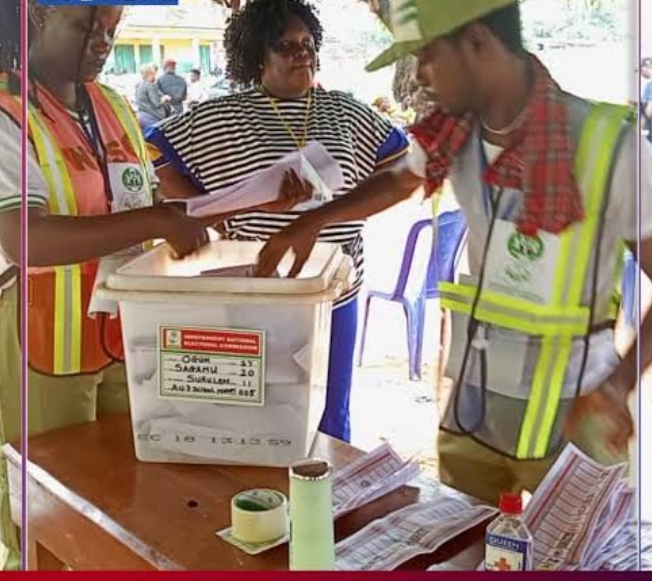
Voters who arrived at various polling units in Akwa Ibom State to vote their candidate at the state local government elections have expressed dismay that election materials are yet to arrive up till 11am.

The Akwa Ibom State Independent Electoral Commission, AKISIEC had announced that accreditation and voting would start by 8am and possibly end by 2:30pm or when the last person on the queue votes.

However, at 11:05 when our correspondent visited some of the polling units in Uyo metropolis and Itu local government, election materials were yet to arrive and few voters especially women were seen chatting while young boys were just playing football on the road.

At unit 2 ward 11, village council hall of Atai Ibiaku, Itu local government area of the state, pastor Gideon Edidem regretted that even three hours behind schedule, AKISIEC was yet to bring election materials.

“AkISIEC is not matured like INEC, despite all the preparations and assurances, nothing has happened untill this moment. We are here waiting for them, we learnt that they’ve not even left the office.” 

A Seventy Five year old Augusta Edem who came out to vote at the village hall decried the late arrival of materials.

At Unit 001 ward 14, Uyo local government, no electoral officer or police officer was seen in the area but only voters who were in clusters discussing.

Rita Archibong, the unit Coordinator told journalists  that they would wait till materials arrive.