

By Kenneth Ofoma
When Governor Peter Mbah of Enugu State returned to the Peter Mbah Law Auditorium of Godfrey Okoye University on October 29, 2026, to present his administration’s manifesto performance report, the occasion represented more than another government event. It provided an opportunity to examine the relationship between electoral promises, governance decisions and measurable development outcomes.
The significance of the venue was not lost on observers. It was the same auditorium where Mbah presented his manifesto in October 2022, months before the governorship election that brought him to office.
Returning to the same location to account for his stewardship created a symbolic connection between the promises made before the election and the projects his administration says it has implemented since assuming office on May 29, 2023.
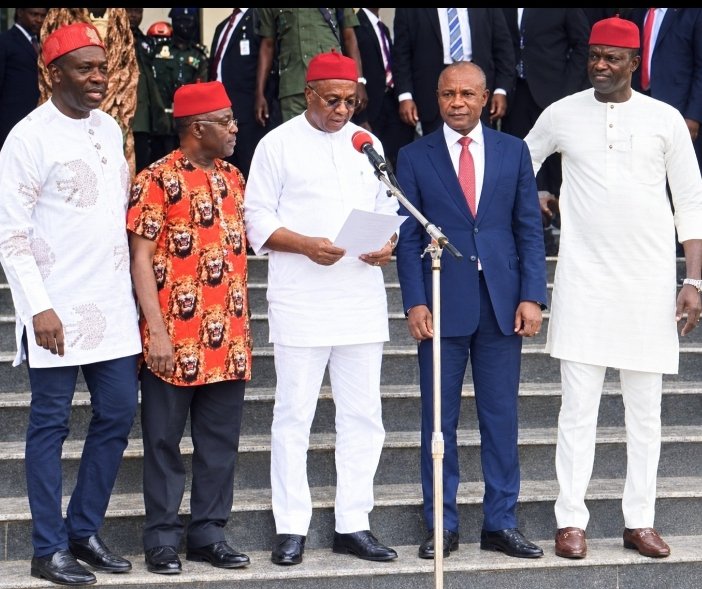
The presentation, titled “Our Commitment to Ndi Enugu: The Journey So Far,” attracted academics, traditional and political leaders, business owners, civil society organizations, professional bodies, students and media practitioners.
Unlike conventional government briefings largely dominated by speeches and political declarations, the presentation featured extensive pictorial, video and infographic evidence of projects and interventions across different sectors.
The approach provided an opportunity for the audience to examine the administration’s claims against visible development activities.
At the centre of the presentation was a broad development agenda covering infrastructure, education, healthcare, aviation, agriculture, transportation, tourism, industrial revitalization and institutional reforms.
From the establishment of Enugu Air and the construction of more than 260 Smart Green Schools and 260 Type-2 Primary Healthcare Centres to the reconstruction of Hotel Presidential, the International Conference Centre and the revitalization of Nigergas, the administration outlined projects intended to reposition Enugu’s economy and public services.
From Economic Uncertainty to Renewed Activity
One of the major issues highlighted by Mbah was the condition of Enugu when he assumed office in 2023.

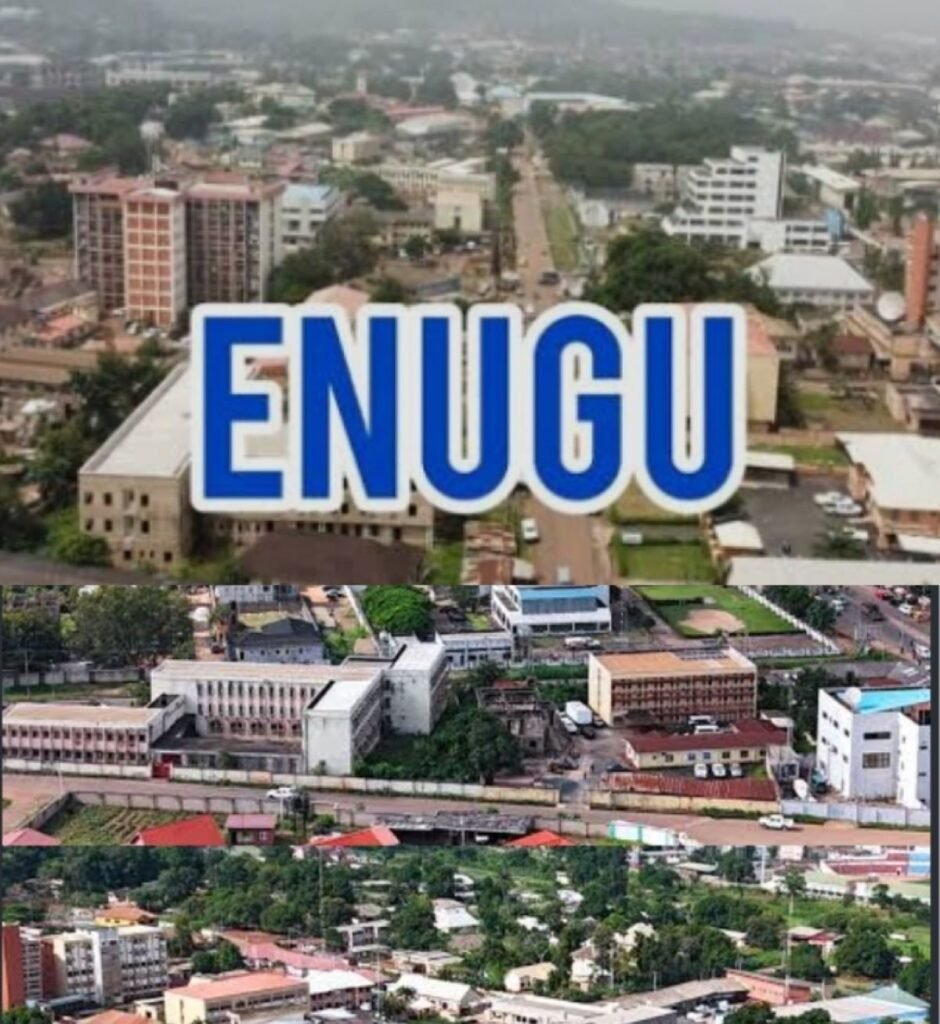
The governor recalled a period characterised by insecurity, declining commercial activities, deteriorating infrastructure and reduced public confidence.
He particularly identified the sit-at-home order, which had disrupted economic and educational activities, as one of the challenges confronting the state.
According to him, Mondays had effectively become non-working days, with markets, businesses and schools experiencing disruptions while residents struggled to maintain their normal economic activities.
He argued that restoring security and public confidence was therefore a necessary starting point for the administration’s development agenda.
The governor maintained that the return of commercial and social activities had created a more favourable environment for businesses, investors, traders and residents.
This is particularly important because Enugu’s ambition to grow its economy from an estimated $4.4 billion to $30 billion requires an environment where businesses can operate, investments can flourish and economic activities can continue without unnecessary disruptions.
However, the sustainability of this recovery will depend on continued attention to security, employment generation, private-sector participation and the expansion of economic opportunities across the state.
Infrastructure and the Economic Transformation Agenda
Infrastructure development remains one of the most visible components of the Mbah administration’s manifesto implementation.
The government reported that more than 1,521 kilometres of roads had been constructed or reconstructed across urban and rural communities.
Beyond improving road connectivity, the projects are intended to facilitate agricultural production, ease transportation, open up rural communities and strengthen commercial activities.
Strategic road corridors, including Owo-Ubahu-Amankanu-Ikem, form part of the administration’s broader effort to improve connectivity between communities and economic centres.
Another ambitious undertaking is the proposed 10,000-hectare New Enugu Smart City, designed to incorporate modern road networks, electricity, water supply, telecommunications and sewage infrastructure.
If successfully implemented, the project could provide a framework for planned urban expansion, attract private investment and create opportunities for businesses and residents.
Nevertheless, the long-term value of these infrastructure investments will ultimately depend on their quality, maintenance, accessibility and economic impact on the communities they are designed to serve.
Education and Healthcare: Investing in Human Capital
Beyond roads and physical infrastructure, the administration has placed considerable emphasis on education and healthcare, two sectors that directly influence the quality of life and future productivity of the population.
Through its Smart Green Schools initiative, the government is constructing and equipping modern schools across the state’s 260 political wards.
The programme reportedly includes more than 260 school facilities and over 7,000 classrooms, equipped with digital learning facilities, ICT centres, robotics and artificial intelligence laboratories, e-libraries, solar-powered infrastructure and smart farms.
The provision of learning materials, tablets, uniforms and daily meals is also intended to address some of the barriers preventing children from accessing quality basic education.
With approximately 33 per cent of recent state budgetary allocations directed towards education, the administration has identified human capital development as an important pillar of its economic development strategy.
In healthcare, the construction and equipping of 260 Type-2 Primary Healthcare Centres, one in each political ward, represents another major intervention.
The facilities are intended to bring essential healthcare services closer to rural and urban communities, while the recruitment of healthcare personnel is expected to strengthen service delivery.
The ongoing development of the 300-bed Enugu International Hospital is also designed to expand specialist medical services and reduce the need for residents to travel outside the state for certain medical treatments.
The critical test, however, will be the ability to sustain these facilities through adequate staffing, medical supplies, equipment maintenance and affordable services.
Repositioning Enugu as a Business and Investment Destination
Another major component of Mbah’s development agenda is the restoration of Enugu’s position as a preferred destination for business, tourism and investment.

The launch of Enugu Air represents an important development in the state’s aviation ambitions, while increased flight connections into Enugu are expected to improve accessibility for investors, business travellers and tourists.
The introduction of modern transport terminals and compressed natural gas-powered buses also forms part of the administration’s efforts to modernise public transportation and improve urban mobility.
Similarly, the reconstruction of Hotel Presidential and the development of the International Conference Centre complex, including a five-star hotel component, are intended to strengthen the state’s hospitality and conference tourism sectors.
These projects reflect an understanding that Enugu’s economic potential extends beyond government activities and traditional commerce.
The revitalization of industrial assets, including Nigergas, alongside investments in agriculture and agro-processing, is also aimed at expanding the state’s productive capacity.
In agriculture, the administration highlighted the development of farm estates across the wards, support for thousands of smallholder farmers and investments in mechanisation, storage and processing.
The objective is to improve food production, strengthen rural economies, create employment and reduce post-harvest losses.
Water infrastructure interventions, particularly the expansion of production capacity in Enugu municipal areas, also feature prominently in the administration’s efforts to improve public utilities and living conditions.
Beyond Projects: The Importance of Institutional Reforms
While roads, schools, hospitals and other physical projects provide visible indicators of development, the sustainability of governance achievements depends equally on institutional strength and financial discipline.
The Mbah administration’s Citizens Charter, established through Executive Order 001 signed on May 29, 2023, is intended to strengthen transparency, improve public service delivery and make government officials more accountable to citizens.
Revenue automation and fiscal reforms have also formed part of the administration’s efforts to expand internally generated revenue, improve collection mechanisms and reduce financial leakages.
These reforms are particularly important because the governor’s ambition of growing Enugu’s economy to $30 billion cannot be achieved through public expenditure alone.
It requires a business-friendly environment, stronger institutions, private-sector investment, productive enterprises and policies capable of sustaining economic growth beyond the lifespan of any administration.
The September 2026 presentation of a compendium documenting more than 10,000 government milestones also provided another reference point for examining the administration’s development record.
However, the true measure of institutional reform will be determined by how effectively these policies translate into improved public services, greater transparency and tangible benefits for ordinary residents.
Accountability and the Politics of Performance
Perhaps one of the most significant aspects of the manifesto performance presentation was the opportunity it created for public accountability.
In a democratic system, political manifestos should not end as campaign documents. They should provide a framework against which citizens can periodically examine government performance.
By returning to the same auditorium where he presented his manifesto in 2022, Mbah created an opportunity to connect his original development promises with the projects and policies his administration says it has delivered.
The Vice-Chancellor of Godfrey Okoye University, Professor Christian Anieke, commended the governor for returning to the institution to account for his stewardship.
He urged other political leaders to adopt the practice of periodically presenting their performance records to the public, describing accountability as an important component of democratic leadership.
Anieke also observed that several of the administration’s projects and interventions were visible across the state.
The event equally generated political reactions, including calls by supporters for Mbah’s re-election. However, beyond the political endorsements, the more important consideration remains the extent to which the administration’s programmes are meeting the expectations of the people.
Indeed, the governor’s appeal for residents to contribute their ideas, skills, enterprise and experience to the development of the state raises another important issue: sustainable development requires collaboration between government, the private sector and citizens.
The Unfinished Business of Transformation
Despite the projects and interventions presented, Enugu’s development journey remains a work in progress.
The ambitious $30 billion economic target, for instance, requires sustained investment, employment generation, industrial expansion, improved productivity and stronger economic participation at the grassroots.
Similarly, ongoing infrastructure projects must be completed to acceptable standards, while newly established schools and healthcare facilities require consistent funding, personnel and maintenance.
The administration must also demonstrate that the benefits of its development agenda extend beyond major urban centres to rural communities, vulnerable households, young people, farmers and small businesses.
These are important considerations because the success of governance should not be measured exclusively by the number of projects announced or commissioned, but also by their accessibility, functionality and measurable impact on people’s lives.
As Enugu approaches another electoral cycle, the governor’s manifesto scorecard will inevitably feature in public discussions about governance, continuity and the future direction of the state.
For the administration, the challenge is to consolidate existing interventions, complete ongoing projects and demonstrate that its development model can produce sustainable economic and social outcomes.
Ultimately, the significance of Mbah’s manifesto presentation goes beyond the projects displayed on giant screens or the applause that accompanied his address.
It brings the conversation back to a fundamental principle of democracy: elected leaders must remain accountable for the promises upon which they sought and obtained public office.

The people of Enugu must therefore have the opportunity to examine the administration’s achievements, identify outstanding commitments and determine whether the state’s development trajectory reflects their collective aspirations.
The Tomorrow Is Here promise will ultimately be judged not by its political appeal, but by the extent to which it translates into better schools, accessible healthcare, improved infrastructure, economic opportunities, security and a higher standard of living for Ndi Enugu.
That is the enduring test of Mbah’s manifesto scorecard and the real measure of Enugu’s journey from promises to projects.
Kenneth Ofoma is Senior Special Assistant (SSA), Policy and Communication, to the Governor of Enugu State, Dr Peter Ndubuisi Mbah.