…..Recover two firearms, ammunition, other incriminating exhibits
By, Venica Uchechukwu, Enugu
Operatives of the Enugu State Police Command have arrested fourteen (14) suspects in two intelligence-led operations targeting cultism and other criminal activities across the State.
The operations resulted in the recovery of two firearms, three live cartridges, and other incriminating exhibits, underscoring the Command’s sustained offensive against violent crime.
In a statement sent by the Police public relations officer Enugu State command headquarters, Daniel Ndukwe, said that On July 26, 2026, at about 12:00 noon, operatives of the Anti-Cultism Sub-Unit of the Violent Crime Response Unit (VCRU),
Leveraging the confessional statement of Nwodo Peters Chinwe okwu, alias “Sir-P” or “Biggy” (male, aged 25), recovered a locally fabricated single-barrel pistol concealed in a bush in Eha-Amufu, Isi-Uzo LGA.
The suspect had earlier been arrested and handed over to the Sub-Unit by the Isi-Uzo Police Division during a joint operation, alongside seven other male suspects. They are Nnaji Emmanuel (aged 34)
, Iroegbu Joshua (aged 18), Nwafor Miracle (aged 28), Ogbonna Moses Osinachi (aged 19), Oha Chidiebere Francis (aged 24), Udebuani Chukwuma (aged 30), and Elochukwu Oko, alias “Benson” (aged 29).
Earlier, at about 2:00 a.m., operatives of the same Sub-Unit, acting on the confessional statement of Izuchukwu Obieze,
alias “Small” (male, aged 24), who is under investigation for conspiracy and cultism, carried out a follow-up operation in Ezeagu LGA.
The operation led to the arrest of five other male suspects: Oscar Ebuka (aged 37), Eze Chimaobi Godson, alias “Torpedo” (aged 36), Ukeje Kingsley (aged 37),
Tochukwu Chilo, alias “Boss Me” (aged 26), and Nnamezie Amechi, alias “Obodobuigwe” (aged 46), and the recovery of one pump-action gun loaded with three live cartridges.
Investigations are ongoing as the suspects are making useful statements. Efforts are being intensified to arrest other accomplices currently at large and recover additional exhibits.
All the suspects will be arraigned in court upon the conclusion of investigations.
The Commissioner of Police, CP Mamman Bitrus Giwa, commended the operatives for the successful operations and reaffirmed the Command’s unwavering commitment to combating cultism, armed robbery, and other violent crimes across the State.
He urged residents to remain vigilant, law-abiding, and to continue supporting the Police with credible and timely information.
The Bauchi State Government, has secured a US$91.6 million financing package from the ECOWAS Bank for Investment and Development (EBID) to fund 24 strategic road and bridge projects across the State.
The agreement, signed at the headquarters of EBID in Lomé, Togo, marks another milestone in Governor Mohamed’s infrastructure renewal agenda and reinforces his administration’s commitment to opening up communities through improved road networks.
Bala Mohammed described the agreement as a significant step towards achieving his administration’s vision of building modern infrastructure capable of driving economic growth and improving the quality of life for the people.
The governor assured the bank that every dollar of the facility would be managed with transparency, accountability and fiscal discipline to ensure timely completion of the projects.
He said that the investment will really improve, strengthen the state transport network, ease the movement of people and agricultural produce.
He further said that the investment will also expand access to markets, and stimulate economic growth across Bauchi State.
The governor commended the good effort of the EBID for its confidence in the state vision.
The governor said that the financing facility will support the delivery of 24 critical road and bridge projects linking urban centres, rural communities and major economic corridors across the state.
Governor Bala Mohammed assured the people of Bauchi that the funds will be managed with transparency, accountability and fiscal discipline to ensure the successful delivery of every project.
On his part, President of EBID, George Agyekum Donkor, praised Governor Mohammed for his bold investment in infrastructure, describing the initiative as a strategic intervention that will unlock Bauchi State’s enormous economic and agricultural potential.
According to Donkor, countries that have achieved sustainable industrial development have done so through consistent investment in infrastructure, particularly road networks that support trade, business and industrial expansion.
He noted that Bauchi’s vast landmass and abundant agricultural resources make the transport programme both timely and necessary.
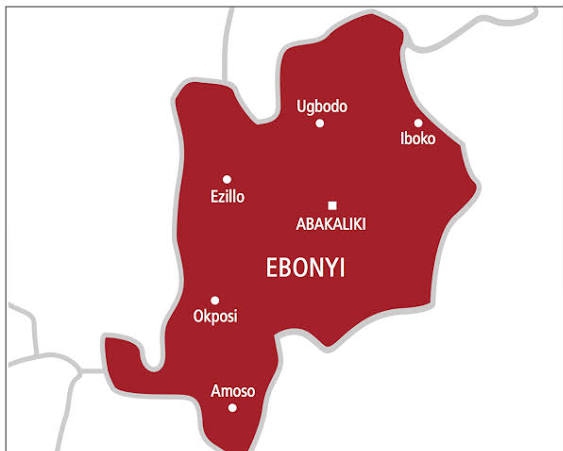
The forum of management member committees numbering over five hundred and twelve, and cut across the thirteen LGAs of Ebonyi State have ahead of the forthcoming 2027 general election adopted governor Francis Nwifuru as its sole guber candidate.
The group, however, denied the allegation making the rounds in the state that some members are playing anti-party, describing it as fake, false and unverifiable.
They pledged their unalloyed commitment to continue mobilizing citizens at the 171 wards to give governor Francis Nwifuru massive votes in the forthcoming general election in the state.
The state chairman, forum of management members committee, Nkwuda Friday made this known while speaking with newsmen shortly after in a rally staged at No.1 Onwe Rd Abakaliki to adopt governor Francis Nwifuru as sole guber candidate.
The Nations News reports that the motion for the adoption of the governor Francis Nwifuru as sole guber in the 2027 general election, was moved by Denis Ominyi and seconded by Nweke chiamaka, and put to vote by the forum chairman, Nkwuda.
Nkwuda said: “We adopted governor Francis Nwifuru for a second term in office, because he has done very well with the mandate reposed in him by the citizens of Ebonyi State.
“we, the Management members Committee, and the entire Ebonyi state are happy with the governor. HeIncreased our salaries to 70%. Before then, the salary of Management Committee members was nothing to write home about.
“Apart from that, there are ongoing infrastructural developments in all parts of Ebonyi state.The peace we are enjoying today in Ebonyi state is second to noon.
In terms of education, he awarded scholarships to over 1,000 indigenes of Ebonyi state, to study both at home and abroad.
So, it is because of the good governance and many other things he has done for the people of Ebonyi, that motivated us to adopt him as our sole guber candidate in 2027, to enable him complete his good works.
Speaking on the allegations of anti-party, Nkwuda said; “It is not true. Nothing like anti-party.For me, we don’t have any other party in Ebonyi state.”Governor Francis Nwifuru doesn’t have any rival. He is the only sole candidate that everybody, the Ebonyians knows.He is the person that we are voting for.
“And the management committee members are going to vote for him massively. In fact, the management committee members have started sensitizing everybody within the 171 electoral wards that made up Ebonyi state.
“Not only that, the forum is also going from house-to-house campaigning, to ensure that every eligible voter gets their voter’s card, ready to participate in the 2027 general election” he stressed.
Responding, the state governor Francis Nwifuru who was represented in the event by the commissioner for Local government and Chieftaincy matters, Uchenna Igwe, applauded the forum for adopting the governor for a second term in office.
He assured them the preparedness of Nwifuru’s administration to evenly boost agriculture, economy, education and human capital development if voted massively in the forthcoming 2027 election.
The Niger State Government has commenced the profiling of herders migrating into the state from neighbouring states as part of measures to tackle banditry, cattle rustling and other security threats.
The Commissioner for Pastoral and Nomadic Affairs, Umar Sanda Rabe, disclosed this on Tuesday during the New Niger Quarterly Media Briefing organised by the Ministry of Information and Orientation in Minna.
According to the Commissioner, contrary to widespread belief, there are no established bandit camps within Niger State.
He explained that most criminal elements responsible for attacks operate on a “hit-and-run” basis, crossing into the state from neighbouring states before retreating to their bases.
“We do not have bandit camps in Niger State. Most of those attacking our people cross from neighbouring states, carry out their attacks and immediately retreat,” he stated.
Rabe attributed the situation to Niger State’s vast borders with Kaduna, Zamfara, Kebbi, Kogi States and the Republic of Benin, noting that the state’s strategic location makes it vulnerable to incursions by criminal elements.
He disclosed that the state, which has an estimated livestock population of about four million predominantly in the Niger South Senatorial District, has also been battling cattle rustling. To address the challenge, the government has introduced stricter regulations on livestock movement.
“The Ministry is working closely with security agencies, particularly the Police, to ensure that no livestock is transported out of Niger State without the necessary legal permits,” he said.
On the recent influx of herders into parts of the state, the Commissioner revealed that the government, in collaboration with security agencies, has begun a comprehensive profiling exercise to ensure the new arrivals do not pose security risks.
He said officials have visited communities in Gbeganu, Kutigi, Lapai and Gurara, where the affected herders are being profiled and required to provide guarantors who can vouch for their character and conduct.
Rabe also highlighted the Bago administration’s commitment to the welfare and inclusion of pastoral communities, revealing that 275 nomadic schools are currently operational across the state, while 60 boreholes have been constructed in Fulani settlements to improve access to water for both humans and livestock.
Earlier, the Commissioner for Information and Orientation, Obed Nuhu Nana, said the New Niger Quarterly Media Briefing was established to deepen public understanding of government policies and programmes while promoting constructive engagement between government and citizens through the media
He noted that the initiative reflects the administration’s commitment to institutionalizing transparency, accountability and open governance by ensuring that information flows freely and citizens remain informed and actively involved in governance.
Public health advocates from across Africa, have converged in Lagos for the third edition of the Africa Centre for Tobacco Industry Monitoring and Policy Research (ATIM) Tobacco Industry Monitoring (TIM) training course
The Nations News reports that the training is targeted at strengthening Africa’s capacity to monitor, expose and counter tobacco industry interference in public health policy.
In a statement signed by the media and communication officer CAPPA, Robert Egbe said that the five-day event, being held in Nigeria for the first time, brings together carefully selected participants from 12 countries: Kenya, Nigeria, Benin, Botswana, South Africa, Sierra Leone, Cote D’Ivoire, Ethiopia, Uganda, Zambia, Senegal and Zimbabwe.
Led by an internationally renowned tobacco control expert, Prof Lekan Ayo-Yusuf, the team of facilitators at the training includes lecturers from the University of Bath in England, as well as policy advocates and researchers from the United States, Nigeria, Brazil, and Togo.
Ayo-Yusuf, who is Head of the School of Health Systems and Public Health at the University of Pretoria and Director of ATIM, welcomed participants to the training and highlighted studies showing that tobacco industry interference in public policy and public health remains a continent-wide challenge, contributing to preventable deaths and undermining effective tobacco control.
He explained that the course is designed to fortify the continent’s response to the problem, by moving advocates from reacting to tobacco industry interference to proactively anticipating, monitoring and countering it through evidence-based action.
“The course is intended to strengthen the capacity of tobacco control advocates to effectively monitor and counteract tobacco industry interference in public health policies in Africa,” Ayo-Yusuf said.
“It is also intended to help advocates better understand the tobacco industry and help them hold it to account – which is crucial to further progress in tobacco control.”
He expressed confidence that at the end of the training, advocates would be better equipped to identify and document tobacco industry interference, analyse emerging industry tactics, search and interpret industry documents, identify front groups and third-party allies, and generate evidence to support effective policy advocacy.”
“They will also be able to draft effective tobacco control policies and implementation and draft effective and efficient advocacy strategies for their organisations or countries,” Ayo-Yusuf added.
One of the facilitators and Executive Director of Corporate Accountability and Public Participation Africa (CAPPA), Akinbode Oluwafemi, warned that the tobacco industry had “continued to reinvent itself”, hence the need to groom a new generation of advocates to continue the fight for public health.
“Some of us have been in tobacco control advocacy for close to three decades and we recognise the need to build the next generation of advocates,” Oluwafemi said.
“Among the participants, you’ll find government officials, civil society organisations, public health advocates, economists, among others. ATIM is building their capacity to take the baton to the next level.”
He said the need for such capacity-building had become even more urgent as the industry increasingly promotes “a false narrative of harm reduction”.
“It is necessary to ensure that advocates get updates about how the industry continues to spread misleading narratives that get our youths and children addicted and how the government should enforce the WHO Framework Convention on Tobacco Control (WHO FCTC) and the national laws as appropriate,” Oluwafemi added.
Participants commended ATIM for organising the course.
“We are here in Lagos, Nigeria participating in the ATIM course and, so far, their training has been perfect,” said Jackline Mbone Juma, a youth tobacco control advocate for the Kenya Tobacco Control Alliance and Health Promotion.
“We’ve learnt a lot. We’ve been able to gain hands-on skills on how to conduct industry monitoring and how we can also research, and access tobacco industry documents. Additionally, we’ve been able to understand and reflect on the WHO FCTC.”
Emmanuel Onwuka, a journalist and Communications Officer at the Nigeria Tobacco Control Alliance (NTCA), highlighted the training’s relevance, particularly as the tobacco industry develops new products and marketing strategies targeting young people.
“The ATIM Building Capacity in Industry Monitoring for Effective Tobacco Control Advocacy in Africa (BETA 3.0) training has come at a crucial time, especially as the tobacco industry continues to develop new tactics and increasingly targets young people,” Onwuka said.
“Through the training, I am gaining valuable knowledge about tobacco use trends and the tobacco industry’s agenda across Africa.
I am confident that by the end of the programme, I will be better equipped with the skills and knowledge needed to effectively monitor, document, and report on tobacco industry interference.”
Worried by the market crisis between Ozomagana Building Materials Association and Modebe Enterprises, (Modebe family), Onitsha, Anambra state which has lingered for about a year now, the Anambra state government has wadded into the crisis and stopped all works going on in the market pending the determination of the matter.
In the letter to stop work and other activities in the market which was signed and addressed to the caretaker committee of the market by the Commissioner for Commerce, Nomso Ebonwu, it was also copied from the DPO, Central Police station Onitsha, and the Modebe family.
The letter was titled, “Urgent directive for immediate cessation of demolition and construction works at the Ozomagana Building Materials Market , Onitsha, pending conclusion of investigation.”
“According to the Commissioner, “I have received and carefully reviewed a formal petition dated 23rd June, 2026, filed by aggrieved members of the Ozomagana Building Materials Market, Onitsha.
The petition outlines several critical grievances regarding the administration of the market under your current leadership and calls for urgent intervention.
“The petitioners have raised profound and actionable allegations that require immediate regulatory scrutiny.
These include the unlawful demolition of established market shops and building plazas without issuing formal notices or consulting the affected traders, resulting in massive losses of goods and properties.
“It is also alleged that your committee has secretly commenced a new plaza construction project on land belonging to the Market Association without proper disclosure, fraudulently converting public market structures into personal holdings.
Furthermore, complaints have been made regarding the systemic harassment of traders through private security forces and the outright violation of the active State Government embargo placed on structural modifications without requisite approvals first had and obtained.
“Consequently, in the interest of justice, the rule of law, and to prevent a total breakdown of peace and economic stability within the Onitsha commercial hub,
I hereby order and direct you to IMMEDIATELY STOP ALL DEMOLITIONS, structural alterations, and further construction works at the Ozomagana Building Materials Market plaza or any properties associated therewith.
“This directive is absolute, takes effect immediately, and shall remain firmly in force pending the full conclusion of the investigation currently being conducted by this Ministry into the matter.
For the avoidance of doubt, any continuation of work, demolition, or disruption of the peace under any guise will be treated as willful defiance of State Authority and will attract immediate executive sanctions, including the dissolution of your Caretaker Committee.
You are expected to ensure absolute compliance with this order and maintain total peace within the market environment.
“Please accept as always the assurances of my esteem regards,” he ended.
In a swift reaction, the former chairman of Onitsha International Electronics market, Izu Okoye, described the state government intervention as a right step disclosing that it will end incessant arrest and subsequent detention of traders in the market by the legal department, Police Force headquarters Abuja.
Explaining further he said that the said Legal department sees Onitsha as fertile ground to get rich quickly adding that on three occasions the department has besieged Onitsha and arrested the chairman of the market, Obiora Okoro and others on alleged trumped up charges.
According to him, “There was an agreement for 50 years lease between the traders and Modebe family for 10 plazas at #7million each which amounted to #70million and money paid.
And Modebe family later said that the agreement will be counseled that money agreed upon was low and the traders refused which prompted incessant and repeated arrest of Obiora and some traders by the Police from Abuja to intimidate the traders to rewrite and sign a new lease agreement
“The arrest was started by the banned Special Investigation Unit, (SIU), Force Headquarters Abuja who took order from a retired Inspector General of Police, IGP, who they call (Daddy)against the traders but on assumption of office, the incumbent IGP, Tunji Disu sacked SIU and other bad eggs within police formations.
“We are happy with the Commissioner of Commerce because he started well in his appointment and we pray that God will give him the strength because traders in Onitsha have been subjected to hardship by the Abuja police.
The chairman of Provision market Ochanja, Sunday Okechukwu, Obiora Okoro who is chairman of Ozomagana traders and chairman of Iweka Electronics market have been detained at Abuja for refusing to re-write and sign a new lease agreement.
“I must confess that the immediate past Special Adviser (SPAD) to Governor Chukwuma Soludo on Trade and Commerce, Everest Uba, was the cause of this crisis because he was biased and removed the elected chairman of Ozomagana market, Obiora Okoro and appointed a caretaker committee, saying that Obiora was owing the state government market IGR that was false.
“Obiora was generating #20,500,000 to state government and the caretaker committee generates #7million but pay to government, #900,000 because bulk money generated by it was used to settle Abuja police against Obiora and others for refusing to sign new lease agreement,” Izu maintained.
…..urges contractors handling other projects to sit up or face same termination
By Uchenna Okeh Abakaliki
Ebonyi State government has announced the immediate termination of all ongoing 2 kilometer rural road projects going on in the three senatorial zones of the state.
The Commissioner for special projects, Dr. Ngozi Obichukwu made this known to newsmen in Abakaliki shortly after in a meeting with all the contractors handling the jobs.
Obichukwu frowned at the slow pace of work and unwanted delays in the projects execution by the contractors.
She emphasized that the rural roads construction is the heart beat of governor, Francis Nwifuru’s administration and can’t be joked with.
The Commissioner, Obichukwu noted further that the rural roads were meant to ease the transportation problems faced by the rural farmers, especially in taking their farm produce to the urban areas.
She regretted that the reason for the roads were not met and completion period far gone hence the contract termination.
The Commissioner, Obichukwu urged other contractors handling any other state projects to sit up for timely completion or face the same termination of their jobs.
Palpable fear has allegedly gripped traders at Onitsha Main market, following commencement of fresh demolition of illegal structures by Anambra state government, as part of its ongoing urban renewal and market redevelopment programme.
Recall that the demolition exercise began last weekend by the Anambra State Ministry of Physical Planning and Urban Development in line with Governor Chukwuma Soludo’s broader urban regeneration agenda designed to improve infrastructure, restore order, and create a safer environment for traders and residents.
Areas affected in the demolition exercise include, Bright Street, Johnson Street, and Sokoto Road, where extensive renovation and redevelopment works are expected to commence.
Fielding questions from newsmen, the Commissioner for Physical Planning and Urban Development, Chijioke Ojukwu, said the demolition became necessary in view of scores of the affected structures that had illegally encroached on public spaces and obstructed both vehicular and pedestrian movement.
According to him, “Most of these shanties were built on the right of way, making movement difficult for motorists and pedestrians. We must create the necessary corridors for expansion and ensure proper physical planning in line with the state’s development blueprint.”
He stressed that the exercise was not a surprise to affected occupants, noting that the government had issued adequate notices before enforcement commenced.
He disclosed that the redevelopment project has already received the approval of Governor Chukwuma Soludo, with contracts awarded for the comprehensive renovation and modernization of the affected sections of the market.
Ojukwu stated that the exercise is expected to transform the Main Market into a world-class commercial centre capable of supporting increased business activities while enhancing safety, sanitation, accessibility, and overall aesthetics.
When contacted, the President-General, Anambra State Markets Amalgamated Traders Association (ASMATA), Chief Humphrey Anuna, expressed his support for the regeneration of the market and described the redevelopment project as a landmark intervention that will benefit traders and future generations.
“This project is a welcome development. We urge all traders to cooperate fully with the government and support the ongoing transformation of our markets. The future benefits far outweigh the temporary inconveniences,” Anuna said.
Anuna expressed concern over what he described as the slow response by some traders to earlier evacuation directives, urging those yet to comply to do so in order to avoid unnecessary losses during the demolition.
The controversy over Governor Peter Mbah’s appointments raises a far bigger question about Nigeria’s commitment to competence, national integration and constitutional citizenship.
Public discourse performs its highest function when it subjects those in authority to rigorous, evidence-based scrutiny. Democracy depends on the ability of citizens to interrogate government decisions, challenge public policy and demand accountability from elected leaders.
However, such scrutiny loses both its moral authority and intellectual credibility when it abandons facts in favour of ethnic narratives.
The recent controversy surrounding Governor Peter Mbah’s appointments in Enugu State presents precisely such a moment.
What initially appears to be a debate over political appointments is, in reality, a deeper contest over two competing visions of Nigeria. One vision defines public service through competence, experience and measurable performance. The other filters public appointments primarily through the lens of ethnicity.
It is this second approach that deserves careful examination. The central allegation against Governor Mbah is that the appointment of a handful of Yoruba professionals into strategic positions amounts to the “Yorubanisation” of Enugu State. Such a claim is not merely politically provocative; it also raises important constitutional, ethical and governance questions.
Nigeria’s Constitution guarantees every citizen the right to live, work and pursue opportunities anywhere within the federation. Public institutions are expected to reflect fairness, competence and inclusiveness while respecting applicable constitutional and statutory requirements.
It follows that the mere fact that a qualified Nigerian originates from another state or ethnic group cannot, by itself, constitute evidence of discrimination against indigenes.
Indeed, if ethnicity becomes the principal criterion for judging appointments, Nigeria risks replacing meritocracy with identity politics.
This distinction matters enormously.
A governor who appoints individuals solely because they belong to his own ethnic group may rightly attract criticism for exclusion. Equally, however, a governor who recruits competent professionals from different parts of the country should not automatically be accused of ethnic betrayal merely because those appointments cross regional boundaries.
The difference lies in the evidence.
Legitimate criticism asks whether appointees possess the qualifications, experience and integrity required for their offices.
Ethnic profiling, by contrast, begins with ancestry and treats it as sufficient proof of wrongdoing. Unfortunately, much of the criticism directed at Governor Mbah’s appointments appears to fall into the latter category.
Rather than presenting verifiable evidence of incompetence, some critics repeatedly identify officials primarily by their Yoruba identity, implying that their ethnic origin is itself grounds for suspicion. Such reasoning shifts public debate away from governance and into dangerous territory where identity eclipses objective assessment.
Democracy demands higher standards than that.
If the Chief Executive of a public agency is ineffective, the evidence should be measurable: declining institutional performance, financial irregularities, poor service delivery or failure to meet clearly defined objectives.
Those are the indicators by which competent governance is evaluated across modern democracies.
Ethnicity proves none of them.
Conversely, where officials possess distinguished professional records and bring relevant expertise into government, their performance should be judged on what they accomplish after assuming office—not on where they were born.
Several of the appointments that have generated controversy illustrate this principle. The officials in question bring extensive experience in healthcare administration, financial management, broadcasting, policing, aviation and public-sector reform.
Whether they ultimately succeed remains a legitimate subject for public evaluation. However, reducing accomplished professionals to ethnic labels neither advances accountability nor enriches democratic debate.
The statistical context also deserves attention.
The appointments repeatedly cited constitute only a very small proportion of the Governor’s overall senior appointments. From a governance perspective, it is difficult to sustain the argument that such a limited number constitutes evidence of a systematic ethnic agenda.
More fundamentally, the controversy invites Nigerians to reflect on a broader national question. Should excellence have geographical boundaries?
History suggests otherwise.
Across Nigeria, governments routinely recruit expertise beyond their immediate communities. Lagos has, for decades, appointed and retained highly qualified professionals from every region of the federation.
Numerous Igbo professionals have served with distinction in the Lagos State Government, rising to senior administrative and political positions because their competence was recognised.
Former Commissioner for Economic Planning and Budget Ben Akabueze remains one of the most notable examples. Joe Igbokwe likewise became an influential public official in Lagos despite being of Igbo origin.
Similar examples can be found across Ekiti, Kaduna, Osun and other states where governors have appointed professionals from outside their dominant ethnic groups.
These appointments have generally been interpreted not as evidence of ethnic surrender but as expressions of administrative pragmatism.
That is how mature federations function.
Indeed, Governor Peter Mbah’s own professional history reflects the same philosophy.
Long before assuming public office, he built Pinnacle Oil and Gas into one of Nigeria’s major energy infrastructure companies in Lagos. The success of that enterprise depended not on ethnic patronage but on regulatory approval, investor confidence, technical capacity and commercial viability.
An Igbo entrepreneur was able to develop a nationally significant investment in a predominantly Yoruba environment because the relevant institutions evaluated the project on merit.
Imagine the alternative.
Suppose Lagos had insisted that such strategic investments should be reserved exclusively for indigenous entrepreneurs.
The project might never have materialized, with consequences not only for the investor but also for employment, commerce and national economic development.
The lesson extends beyond business.
Nigeria’s progress has always depended upon the mobility of talent.
Doctors trained in one state save lives in another. Professors educate students far from their ancestral homes. Judges administer justice outside their states of origin.
Military officers defend communities to which they have no ethnic connection. Entrepreneurs build industries where opportunities exist rather than where their surnames originate.
This movement of talent has been one of the country’s greatest strengths.
The Igbo, perhaps more than any other major ethnic group, have historically benefited from this openness.
Across Nigeria and beyond, Igbo professionals have excelled because they were allowed to compete on the basis of ability rather than ancestry.
It would therefore be a profound contradiction to celebrate merit when it benefits Igbo professionals elsewhere while condemning the same principle when qualified Nigerians contribute within the South-East.
Consistency demands otherwise.
There is also a broader national concern.
Political rhetoric that repeatedly emphasises ethnic identity carries risks extending beyond immediate electoral competition.
History demonstrates that social fragmentation rarely begins with violence. It often starts with language that subtly encourages citizens to view neighbours through ethnic categories rather than shared citizenship.
Countries that have experienced severe ethnic conflict frequently reveal similar patterns: persistent stereotyping, collective suspicion and the gradual erosion of trust between communities.
Nigeria, with its own painful historical experiences, cannot afford to ignore those lessons.
This does not mean governments should be immune from criticism.
Far from it.
Governor Mbah, like every elected official, should remain accountable for every appointment he makes. Citizens are entitled to ask whether public officials are delivering results, whether institutions are improving and whether public resources are being managed efficiently.
Those questions strengthen democracy.
Questions framed principally around ethnicity do not.
Ultimately, this debate transcends one administration or one state. It goes to the heart of Nigeria’s unfinished nation-building project.
Will the country continue moving toward a federation where competence, innovation and excellence determine opportunity?
Or will political discourse increasingly encourage citizens to evaluate public service through the narrower prism of ethnic origin?
The answer will shape not only governance but also national cohesion.
Enugu’s history offers reason for optimism. From its origins as one of Nigeria’s foremost administrative, commercial and industrial centres.
The city has welcomed workers, traders and professionals from across the federation. Its growth has been inseparable from migration, enterprise and cultural diversity.
That cosmopolitan heritage should not become a casualty of contemporary political disagreement. Healthy democracies challenge governments with evidence, not prejudice. Strong societies reward competence, not ancestry.
And confident nations understand that excellence knows no ethnic boundaries.
Those principles remain as relevant to Enugu as they are to Nigeria itself.
Contactors handling the various two kilometer roads in Ebonyi State on Monday risked the termination of all ongoing 2 kilometer rural road projects.
It was gathered that some of the contractors have excessively delayed the completion of the said 2 kilometer rural roads for a long time.
The Commissioner for special projects, Ngozi Obichukwu made this known while briefing newsmen in Abakaliki shortly after in a meeting with the contractors.
Obichukwu emphasized that the termination affected all contractors handling the ongoing 2 kilometer rural roads in the three senatorial zones of the state.
“The purpose of this meeting is to ensure that the jobs given to contractors are completed. Not only being completed, but completed on time. Over time, they did not complete the jobs.
“There is a termination of the ongoing 2 kilometer rural roads in the three senatorial zones of the state.
“With this new Ministry of Special Projects, we are going to ensure that all projects that are assigned in Ebonyi State are completed on time.
“We give credence and wonderful praise to our dear governor, Francis Nwifuru.He brought out all these projects just to make sure that the rural areas are developed.
There are so many projects that are ongoing.”Some of them are long-term projects. Some are short-term, like the rural roads are supposed to be a very short-term
“If you look at our rural areas, where these roads are going to, there is a light there now. There is enjoyment there. People are no more suffering.
“Our rural areas that are producing so many agricultural foods are no longer suffering to bring it to the town, where people can buy.
“And today’s meeting was so good. A very wonderful one, because we had the complaint, and we had what the government wanted to know about.
“Something like a certificate that is generated. Something like the terrain of the area, which they are assigned to” she stated. .