Ebonyi: Onicha Legislative Leader debunks Impeachment rumour

By Uchenna Okeh Abakaliki 

The Leader of the Onicha Legislative Council and Councillor representing Agbabor Ward in the Onicha Local Government Area of Ebonyi State, Anayo Kingsley Simon has debunked reports circulating on social media alleging that he has been impeached from his position.

Anayo who spoke to newsmen at the weekend said that he was neither aware of any impeachment notice nor had any formal process been initiated against him as required under Nigeria’s democratic system.

According to him: “I am not aware of any impeachment proceeding on or before now,” he stated.

 “I only read on social media & heard on the news of the above mentioned radio station about such a purported impeachment against my person and office. 

“This is a democratic setting, and there are procedures for such acts if they must hold water.”

He explained that no impeachment notice had been served on him, neither had any investigative panel been constituted nor any formal sitting held to consider an impeachment motion.

“As the leader of the council, I am the one to convene a sitting. If there were genuine grounds for impeachment, a colleague would raise a motion, it would be deliberated upon, and if the majority agrees, then it can stand. But nothing of such has ever happened,” he said.

Responding to questions on whether he may have fallen out with influential political actors, Rt.Hon. Anayo maintained that he has no issues with the state leadership or the local government chairman.

“I don’t have any issue with the powers that be. I have confidence in the government of Ebonyi State, ably led by His Excellency, the Right Honourable Builder Prince Ogbonna Francis Nwifuru. I believe strongly in his People’s Charter of Needs mantra,” he affirmed.

He added that he has been fully supportive of the administration of the Onicha Local Government Chairman, Hon. Ikechukwu Ogbuoffia.

“For all I know, I don’t have any problem with my chairman. If there is any purported move to impeach me, I would say it is likely an act of betrayal from my colleagues which i know can not stand under the current state leadership that so much believes in the rule of laws, and as such does not and will never condone any act of illegality,”he said.

According to Anayo, the only recent disagreement within the council was a collective call he and other councillors made to stakeholders of the local government, urging that more development projects be executed across all wards.

“The last time my colleagues and I raised concerns, it was simply to draw attention to the need for more projects in the interest of the party and the people which was borne out of the zeal to ensure that the people’charter of needs mantra of our dear humanitarian governor is extended to all nooks and crannies of the state.

“And that’s for the interest of our party, and our constituents, which i believe is our primary constitutional responsibility as ward councillors. When you love a leader, you align with his vision,” he stated.

Anayo reiterated his unalloyed loyalty to the state government and the ruling party’s agenda, stressing that any actions he takes are for the overall good of his constituents, his local government and the state at large.

He enjoined all well meaning Ebonyians and residents to avoid acts capable of causing chaos and destabilising the relative peace being enjoyed in the state today, courtesy of the governor, who he described as, “an angel in human form”, 

Anayo also called on the media to always verify the authenticity of their news to avoid misleading the public and tarnishing people’s reputation unjustly. 

He also seized the opportunity to appreciate the good people of Onicha Local Government for their unwavering supports to his leadership and reaffirmed his commitment to ensuring that Onicha local government remains the beautiful bride among all Ebonyi local government areas.

As at press time, no official statement has been issued by the Onicha Legislative Council or the local government authorities regarding the circulating impeachment claims.


ADSIEC Chairman meets political parties, unveils 2026 LG election timetable

By Yagana Ali Yola 

The Adamawa State Independent Electoral Commission (ADSIEC) has released the official timetable for the 2026 Local Government Elections.

The timetable came up, shortly after an executive meeting held on Saturday between the Commission’s Chairman, Alhaji Muhammed Umar Madagali, and leaders of registered political parties in the state.

The meeting, which took place at the ADSIEC headquarters in Yola, brought together party executives to review the Commission’s preparedness and to brief stakeholders on key activities ahead of the polls.

Speaking during the session, Alhaji Madagali reaffirmed the Commission’s commitment to conducting a free, fair, and transparent election, urging political parties to strictly comply with the timetable and maintain peaceful conduct throughout the process.

According to the timetable, the formal announcement of the election date was made on 7th November 2025, followed by a general stakeholders’ meeting on 11th November 2025. 

Political parties are expected to collect nomination forms from 1st to 15th December 2025, and conduct party primaries between 1st and 31st December 2025.

Submission of candidates’ particulars is scheduled for 2nd–9th January 2026, with the publication of particulars on 10th January. 

The last day for withdrawal of candidates is 17th January 2026, while replacement submissions close on 20th January. The final list of cleared candidates will be published on 27th January 2026.

Campaigns will begin officially on 3rd February 2026 and end on 20th May 2026. The final list of polling agents is expected to reach ADSIEC by 30th May 2026.

The Local Government Election is fixed for 31st May 2026, while a run-off election, if necessary, will be conducted on 7th June 2026.

Party representatives at the meeting commended ADSIEC for early preparations and expressed confidence in the Commission’s readiness to deliver a credible election.

Foundation vows to tackle Youths unemployment in Nasarawa

From Abel Zwanke, Lafia

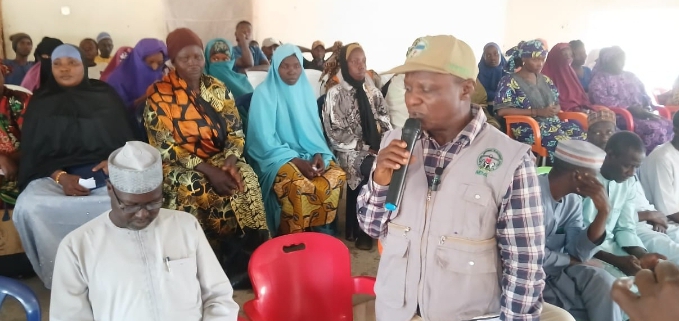
The Renowned development advocate and founder of the Maikaya Development Foundation, Muhammed Musa Maikaya, has intensified consultations with stakeholders across the three geopolitical zones of Nasarawa State.

He engages widely on a transformative vision aimed at tackling youth unemployment and repositioning the state for inclusive development.

Speaking to journalists on Saturday,  Maikaya unveiled what he described as an ambitious and data-driven youth employment revolution, promising that “no graduate will return home to roam the streets after NYSC” if he is elected governor.

Maikaya, who was a leading aspirant in the 2019 APC governorship primaries before stepping down under a consensus arrangement, said his renewed aspiration is driven by his commitment to service, innovation, and inclusive development.

According to him, his newly launched ideology, tagged New Vision, Real Impact for Nasarawa, was inspired by the realities of ordinary citizens across the state. “My inspiration comes from the people,” he said.

 “I was born in Toto and raised among hardworking men and women who dream of better opportunities. My 25-year international experience has shown me how visionary leadership transforms societies.”

On the state’s development trajectory, he noted that Nasarawa has made measurable progress since its creation in 1996, especially in infrastructure, education, and ICT. However, he stressed that “far more needs to be done to unlock its full potential.”

Unveiling his central agenda, Maikaya said youth empowerment remains “the heartbeat” of his vision. To achieve this, he announced plans to establish a Nasarawa Directorate of Employment (NDE), which will serve as a central employment and empowerment hub for all youths in the state.

“The Directorate will record, profile, support, and ensure every qualified youth is employed or empowered,” he said. 

He explained that the agency will operate a Post-NYSC Youth Capture System to digitally register every graduate immediately after service, monitor federal job openings, and push qualified candidates forward for placement in agencies such as Immigration, Customs, NSCDC, Road Safety Corps, and federal ministries.

He added that the Directorate would “partner with the private sector, industries, and financial institutions to create employment linkages” while offering structured training in ICT, agriculture, renewable energy, mechanics, fabrication, fashion, hospitality, film, and creative arts.

Maikaya further revealed a Two-Year Enterprise Support Programme that will provide start-up capital, tools, mentorship, and monitored business development support to young entrepreneurs across the state.

Describing the proposal as realistic, he stated that funding would come from state budgetary provisions, public–private partnerships, development agencies, federal employment grants, and returns from state-owned enterprises. “With intentional leadership and transparency, resources will align,” he assured.

He argued that his model as sustainable. According to him, “For the first time, Nasarawa will be able to say: ‘We know every graduate, their skills, where they can fit in, and we are responsible for helping them succeed.’”

Addressing the needs of youths without formal education, he maintained that “every youth matters,” promising massive investment in artisanship, technical skills, sports, agriculture, local manufacturing, renewable energy installation, and digital economy skills.

Maikaya also pledged to continue and improve on the achievements of the current administration, saying, “Governor Abdullahi Sule has done remarkably well in industrialization, solid minerals, ease of doing business, and infrastructure. Leadership is about continuity, improvement, and innovation.”

Highlighting broader economic goals, he said his New Vision agenda rests on key pillars including economic diversification, human capital development, healthcare, infrastructure renewal, empowerment of women and youths, security, institutional reforms, and environmental sustainability.

To the youths of Nasarawa, he delivered a message of hope: “Do not give up. Your dreams matter. With structured empowerment and good governance, Nasarawa youths will no longer roam the streets, they will lead the economy.”

Maikaya further pledged integrity and impact-driven governance. “I promise integrity, competence, and compassion. A government that listens, delivers, and makes real impact. Together, we will build a Nasarawa that works for all.”

NEMA distributes relief materials to victims of flood disaster in Yola

By Yagana Ali Yola 

The National Emergency Management Agency (NEMA), in collaboration with the Adamawa State Emergency Management Agency (ADSEMA), has distributed a relief materials to the victims of flood disaster in Yola South Local Government Area of Adamawa State.

The intervention was facilitated by Abubakar Baba Zango, Member representing Yola North, Yola South, and Girei Federal Constituency. 

Zango who spoke to newsmen through his Senior Legislative Aide, Usman Mohammed, expressed deep appreciation to the Director General of NEMA, Mrs. Zubaida Umar, for promptly approving the relief items. 

He acknowledged her unwavering commitment to the welfare of disaster affected communities and applauded the agency’s swift response.

Leading the NEMA delegation was Mr. Kurutsi Siman, who reaffirmed the agency’s resolve to continue supporting communities affected by disasters. 

He commended the seamless cooperation with ADSEMA and the contributions of local leadership in ensuring the successful delivery of relief items.

This humanitarian effort underlines NEMA’s ongoing mission to mitigate the impact of disasters and uphold the dignity of affected citizens across Adamawa State and beyond.

Queen Virut distributes books, Uniforms to Orphans in Bauchi 

By: Ajiya Ayuba, Bauchi 

Miss Ayaa of Boi Land, Bogoro Local Government Area of Bauchi, Queen Markus Virut has donated books, uniforms and other writing materials to the less privileged and orphans.

The items was distributed to the students in 19 government schools in the state.

The Nations News reports that the distribution held at all the school premises, which most of the beneficiaries are orphans and vulnerable children.

It was gathered that Queen Virut also paid complete school fees to over 103 students.

The items was distributed in the following schools; Government day senior secondary school Boi, Government day junior secondary school Boi, Central primary school Boi, Primary school Kijim, 

Primary school Pada, Primary school Jolong, Government day junior secondary school Jolong, Government day junior secondary school Ndukum, Primary school Ndukum, Primary school Sabon Abuja, Primary school Dashem Yalwa.

Other schools are: Junior secondary school Dashem Yalwa, Primary school Angwan Wadata, Primary school Jangyer, Junior secondary school Jangyer, Primary school Angwan Angale, Primary school Vung, Junior secondary school Vung and Primary school Dolli.

Virut said that this not the first time that she’s providing writing materials to students. 

She added that she will continue supporting the less privileged children in other to make their studies very easy. 

Child right Protection: C’River Govt, UNICAL, train auxiliary Social Workers in Calabar 

From Ene Asuquo, Calabar 

The Cross River State Government in collaboration with the department of social works, University of Calabar with support from UNICEF flagged off the training of auxiliary Social Workers in Calabar, the State capital yesterday 

Flagging off the training, the state commissioner for social welfare and community development, Bishop Margaret Ene-Ita in her address said the flag-off was a bold step in their commitment to strengthen social welfare structures and ensure that every child in the State is protected. cared for, and given the opportunity to thrive.

She said the government is aware of the limited number of qualified social workers in Cross River State, compared to the vast population, which has contributed to a gap in the provision of timely and quality care for vulnerable children. 

The Honourable maintained that to address this challenge, the Government of Cross River State with support from the United Nations Children’s Fund (UNICEF),!  initiated a robust programme to strengthen community-based child protection structures which are to be supported by auxiliary social workforce to deliver a defined package of child protection services at both the household and community levels.

Ene-Ita disclosed that through the collaborative efforts of the Ministry of Social Welfare and Community Development, the Centre for Citizens’ Rights & Office of the Public Defender, and other partners with the invaluable support of UNICEF,  have successfully mobilized and strengthened existing community-based structures in 29 communities in Calabar Municipality. 

In her words; “As we flag off this next phase which is the training of Auxiliary Social Workers, I am confident that it will further strengthen the social service workforce at the community level”.

“It will enable them to effectively coordinate and support child protection activities, ensuring that every case of abuse, neglect, or exploitation is promptly addressed and that no child is left unprotected in Cross River State”

In her remarks, the representative of UNICEF, Mrs Juliet Chiluwe said, 

UNICEF remain committed to the partnership with cross river state,  to ensure that every child’s right is attained”.

The UNICEF chief then Commended the efforts of the State government for their commitment to ensure that the rights of children are attained. And for the fact that the state is  able to have auxiliary social workers in the communities is a very big achievement, she said 

“And I would like to commend the academia for showing interest and commitment”.

She maintained that, “the children have the right to education, right to survive and right to be protected”.

“our role is to ensure that these children are protected, their voices are heard, and before God and man, they are counted.”

The representative of the vice Chancellor of the University of Calabar, Esther Uzoh of the Department of social works in her address said “we have to be responsible to our children, in as much as we are trying to raise and help social workers”. 

She said there are social workers graduates from the University of  Calabar whom they could engage  to assist the community people, because they need to work together, she stressed.

In her remarks, the representative of the Centre for Citizens Rights, Office of the Public Defender. Florence Agbiji told those that have been trained and deployed to work in their various communities, that they were now servants in their own communities, and would be held responsible for any abuse of any child

She told the trainees that they were chosen by their Communities because of the confidence they have in them, for that reason much were expected from them and they must be ready for the tasks ahead 

“We must be ready to run, We must be ready to do what is the needful. We must be ready to protect our children”, she stated 

Transporters to mobilize 1.2m workers to back Tinubu’s re-election in 2027

By Douglas Ahiaba 

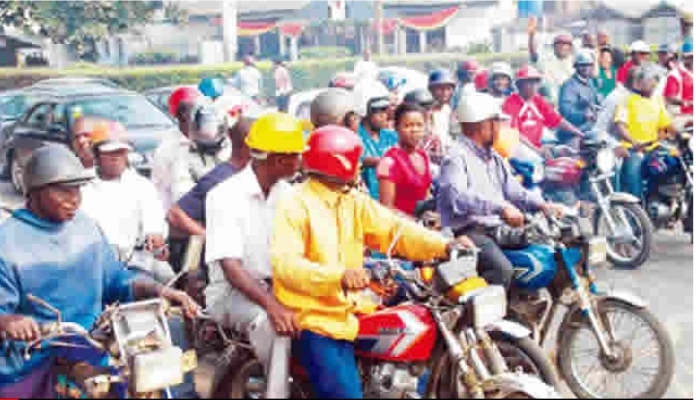
The Transporters for Tinubu 2027 Support Group has announced plans to mobilize more than 1.2 million transport operators across Nigeria in support of President Bola Ahmed Tinubu’s 2027 re-election bid, citing major reforms in the nation’s transportation sector under the current administration.

Speaking at the official inauguration of the support group, the National Secretary Mrs. Chinwe Uwaegbute said the organization was created to ensure the continuity of what she described as the administration’s “transformational trajectory” in the sector.

Uwaegbute said the group intends to mobilize, educate, and engage transporters and stakeholders in all 36 states and the 774 local government areas to back the continuation of Tinubu’s Renewed Hope Agenda.

“We cannot afford to go backward. We cannot abandon the progress we have collectively begun,” she said, warning that ongoing projects and policies must not be left in the hands of those “who do not understand the language of development that this government speaks fluently.”

According to her, the support will engage stakeholders at federal, state, and local levels and communicate the administration’s achievements through mass media campaigns, town hall meetings, and other public outreach efforts.

In his address titled “Transporting Nigeria Forward, Together,” TFT National Coordinator Prince Segun Obayendo said the group’s formation stems from its recognition of transportation as a critical driver of economic and national development.

He noted that millions of Nigerians rely daily on transport operators across land, air, water, and pipeline systems, underscoring the sector’s importance in shaping national progress. 

With this in mind, the group aims to mobilize over two million transporters nationwide to strengthen Tinubu’s infrastructural development agenda.

Obayendo also highlighted pressing challenges in the sector, including deteriorating road conditions, neglect of the railway system, and recurring accidents on waterways. 

He said TFT hopes to draw greater government attention to these issues and advocate for reforms that will elevate the nation’s transport systems to global standards.

He pledged the group’s readiness to partner with the Tinubu administration to further modernize Nigeria’s transport infrastructure.

The event also featured goodwill messages from key stakeholders in the transportation sector, many of whom expressed support for TFT’s mission and the broader goals of the Renewed Hope Agenda.

FG: Needs to address the trust gaps in Nigeria’s cash Transfer Program

By Emmanuel Okoegwale

The Federal Government recently announced plans to scale up its direct cash transfer programme to reach more poor and vulnerable Nigerians. 

According to the Minister of Finance and Coordinating Minister of the Economy, Mr. Wale Edun, the initiative currently benefits more than 15 million households nationwide.

Yet across social media and public discussions, citizens continue to ask hard questions,  who selects the beneficiaries, why is the coverage limited, how are payments made, and why do so many people say they know no one who has benefited? 

These questions reveal a persistent trust gap between the government and the citizens the programme seeks to support.

I have seen this programme from the inside. Between 2017 and 2021, I worked with the National Cash Transfer Office and later the National Social Investment Office as a seconded staff from Save the Children, serving as a payment advisor under the leadership of Mrs. 

Maryam Uwais. They started the program from the hardest-to-reach communities, places with no banks, no electricity, and no mobile networks. 

In those days, payment was a major challenge  before they developed and  introduced an innovative offline QR code system, which later became part of the government’s full digital payment roadmap. 

It was very challenging but they laid the foundation that keeps evolving. 

A major reason for the programme’s limited coverage is Nigeria’s very low investment in social protection. The World Bank recently noted that the country spends just 0.14 per cent of its GDP on social protection, far below the global average of 1.5 per cent and the Sub-Saharan African average of 1.1 per cent. 

With such a small budget, the government focuses on the poorest of the poor. Enumeration begins at state, local government and ward levels, identifying the most vulnerable communities. Within these, a proxy means test determines which households are poorest and therefore eligible for payment.

 This is why some wards receive support while others wait .The limitation is largely financial, not political.

When citizens suspect ghost beneficiaries or irregularities, the most effective step is to engage their state’s social protection unit rather than the federal authorities. 

Calls for the Federal Government to publish the full list of beneficiaries overlook existing data protection laws. Just as a commercial bank cannot release the names of its customers, the government is also bound by confidentiality rules protecting beneficiary data.

Building trust, however, requires more than explanations. It demands visible openness, timely delivery, and a commitment to communicate results clearly. 

The Federal Government and its partners should publish accessible data on programme coverage, payments, and disbursements aggregated by ward or state, not by individual name. 

Local leaders, community groups and the media should be part of the targeting, verification and oversight process to reassure citizens that funds reach those most in need.

Timeliness is equally crucial. Nothing damages credibility faster than delayed or irregular payments. Beneficiaries must receive what they are promised, when they are promised it  and when delays occur, clear explanations should follow.

Communication should also focus on the human impact of the programme. Beyond figures, Nigerians need to see how the transfers improve lives, therefore  how a group of women in a remote village used their stipends to start a savings group, invest in a small farm or dig a community water well. 

Regular independent evaluation at the state level would further strengthen accountability. While most assessments have focused on the national programme, state-level reviews would provide deeper insights and help correct local inefficiencies. 

Over time, the programme could also differentiate support by location between urban / rural and household size, ensuring that rural poor families or larger households receive slightly higher stipends for greater impact.

Building public trust is  the central task while the program scales. . When citizens can see where funds go, how they are used, and what they achieve, confidence will grow and  the National Cash Transfer Programme truly becomes a symbol of inclusive growth and shared prosperity in Nigeria 

Gov  Bago forwards 30 names as commissioner nominees to Assembly

By Daniel Ebi, Minna.

Niger State Governor Mohammed Umaru Bago has forwarded the names of 30 new commissioner nominees to the State House of Assembly for screening and confirmation, in line with Section 192(2) of the 1999 Constitution (as amended).

This was contained in a release signed by the Secretary to Niger State government, Alh. Abubakar Usman.

He said the nominations followed due consultations and were based on the track record of integrity, competence, and dedication to the development of Niger State.

The governor maintained that the nomination reflects the administration’s ongoing commitment to inclusiveness, competence, and the need to consolidate on the New Niger agenda through effective service delivery across all sectors.

The nominees are to also undergo necessary security processes and clearance.

He congratulated the nominees and urged them to remain committed to the vision of transforming Niger State into a model of sustainable growth and responsible governance.

The commissioner nominees are Muhammad Qasim Danjuma from Agaie and Barr. Mohammed Bello Agwara from Agwara, Dr Hadiza Asabe Mohammed from Bida, Sulaiman Umar from Bida, Murtala Bagana from Bida, Abdulrazaq Muazu Jakada from Borgu, Umar Rabe Sanda from Bosso, Ladidi Bawa Bosso from Bosso, Nasiru Muazu from Chanchaga and Faruk Umar Audi also from Chanchaga.

Also in the list are Jacob Baba Yisa from Edati, Abdullahi Adamu Mamagi from Gbako, Haruna Abubakar Magaji from Gurara, Adamu Abdullahi Sheshi from Katcha, Lawal Maikano from Kontagora, Phalal Mohammed Bako from Kontagora, Muazu Hamidu Jantabo from Lapai, Mustapha Ndajiwo from Lavun, Prof. Muhammad Yakubu Auna from Magama, and Kabiru Abbas from Mariga.

Others are Abubakar Umar Abule from Mashegu, Aminu Suleiman Takuma from Mokwa, Barr. Maurice Magaji from Munya, Abubakar Musa Abule from Paikoro, Ahmed Ibrahim Inga from Rafi, Isah Sidi Rijau from Rijau, Hadiza Idris Kuta from Shiroro, Abdullahi Maje from Suleja, Obed Nana from Tafa, and Bashir Mohammed Lokogoma from Wushishi.

The new list contain four women and seven new faces from the recently sacked  Commissioners.

MASSOB begs Trump to divide Nigeria into 6 Sovereign nations to end insecurity

By Cyprian Ebele, Onitsha

Backing the United States of America, USA President Donald Trump’s warning to attack terrorists in Nigeria over alleged Christian Genocide, the Movement for Actualization of Sovereign State of Biafra, MASSOB, otherwise called Biafra Independent Movement, BIM, Thursday, begged Trump to divide Nigeria into six Geo political independent Nations to stop terrorists and genocide in Nigeria.

The movement added that aside insecurity that has resulted in incessant killings and loss of property of Ndigbo, division of the country would end terrorism In Northern Nigeria.

In a statement signed and issued to newsmen by the organization’s Director of information, Mazi Chris Mocha, MASSOB recalled that the British empire separated Pakistan from India just as the mighty Soviet Union had, in 199 separated into 15 independent states.

It recalled further that, going down memory lane, Czechoslovakia in 1992, also separated into two that gave birth to.Czech and Slovakia Republics. 

“Eritrea in 1991 also separated from Ethiopia,

Singapore separated from Malaysia,

 Sweden separated from Norway.

According to the movement, “East- Timor, a tiny population of about 821, 000  separated on May 21, 2002 from Indonesia, Sebia and Montenegro had also separated into two between  November 12th & 13, 2006.

“Kosovo, a part of Serbia, also separated on February 17, 2008, so also was South Sudan in July 9, 2011,” it further revealed.

MASSOB lamented that the people of Biafra have suffered persecutions and wasted more human lives and properties more than these smaller countries with lesser populations in America and Europe that have been granted Independence.

“To end Christian Killings permanently, the position of BİM-MASSOB is that Nigeria should be divided into its natural units of six independent, sovereign countries of which Biafra is one,” it concluded.